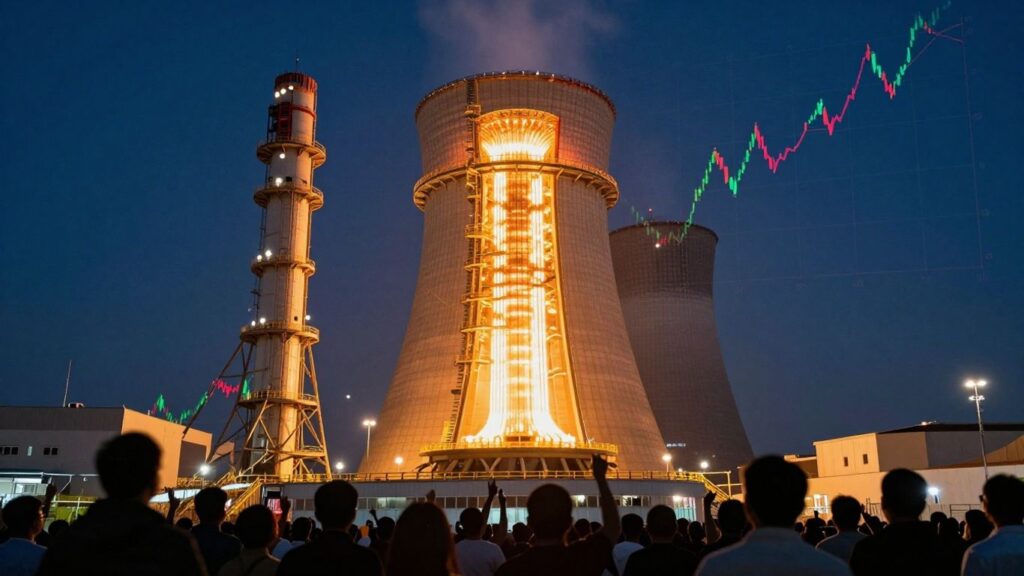

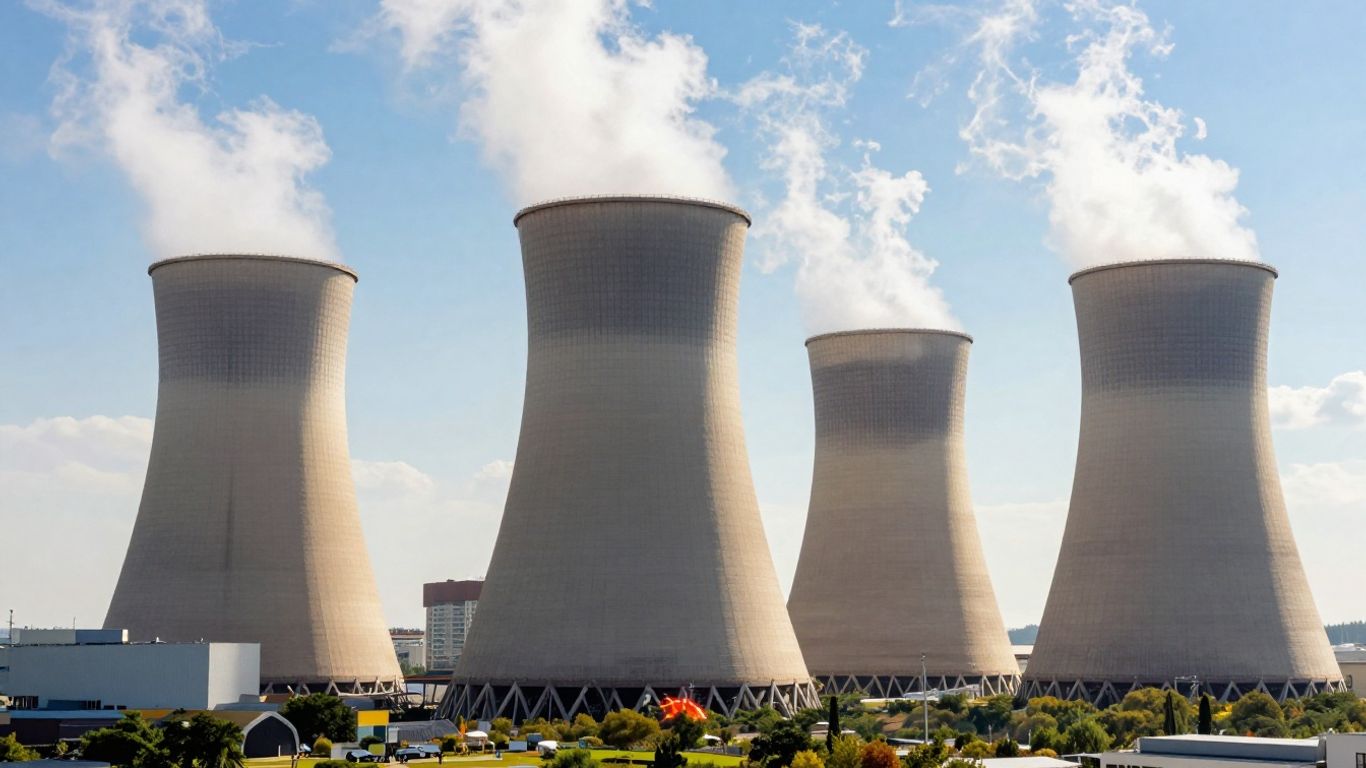
The global energy landscape is undergoing a significant transformation, with nuclear power emerging as a key player in meeting escalating clean energy demands. Driven by the insatiable appetite of data centers and AI, alongside a renewed focus on energy security and decarbonization, investors are pouring capital into the nuclear sector, signaling a potential multi-trillion-dollar industry boom.
Key Takeaways
- Surging demand from AI and data centers is a primary driver for nuclear energy’s resurgence.
- Investments in the nuclear value chain are projected to reach $2.2 trillion by 2050.
- Small Modular Reactors (SMRs) are seen as a critical innovation for faster and more scalable deployment.
- Government policies are increasingly supportive, shifting from headwinds to tailwinds for nuclear projects.
- Challenges remain, including high capital requirements, long lead times, and regulatory hurdles, often necessitating government backing.
The Driving Force: AI and Data Centers
The exponential growth of artificial intelligence and the infrastructure supporting it, such as data centers, has created an unprecedented demand for electricity. Tech giants are actively seeking reliable, 24/7 carbon-free power sources, positioning nuclear energy as an essential solution. This demand is not limited to tech; industries like metallurgy, maritime, and shipping are also looking to electrify, further boosting the need for robust energy generation.
Investment Outlook and Projections
Estimates suggest that investments in the nuclear value chain could reach $2.2 trillion by 2050, a significant increase from previous forecasts. This surge in interest is attracting both established financial institutions and venture capital, with a particular focus on innovative technologies like Small Modular Reactors (SMRs). SMRs offer a more scalable and potentially faster deployment compared to traditional large-scale reactors, with some projections indicating a payback period of half that of conventional projects.
Navigating Investment Challenges
Despite the optimism, the nuclear sector faces considerable challenges. The immense capital required for new builds, coupled with long construction timelines and complex regulatory environments, often leads to budget overruns and delays. Unlike in some other regions, Western financial institutions are still weighing their risk appetite for financing these large-scale projects. Consequently, government support and public-private partnerships remain crucial for de-risking investments and ensuring project viability. Initiatives like the UK’s Regulated Asset Base (RAB) model and US executive orders aimed at fast-tracking reactor development highlight this trend.
Policy Shifts and Global Momentum
Globally, the political landscape is shifting in favor of nuclear power. Countries are easing permitting processes, offering subsidies, and integrating nuclear energy into national clean energy plans. This policy shift is transforming potential headwinds into tailwinds for the industry. From the US and UK to nations in Europe and Asia, there is a growing recognition of nuclear’s role in achieving decarbonization goals and enhancing energy security.
The Rise of Small Modular Reactors (SMRs)
SMRs are at the forefront of nuclear innovation, promising more cost-effective and quicker deployment. Their modular design allows for factory fabrication, reducing construction time and costs. While still facing regulatory hurdles and fuel supply considerations, SMRs are attracting significant investment and are seen as a key component of the future nuclear energy mix, capable of powering industrial parks and data centers directly.
Opportunities Across the Value Chain
Investment opportunities extend beyond reactor construction to encompass the entire nuclear value chain. This includes uranium mining, where a projected supply deficit is driving interest; enrichment and the production of High-Assay Low-Enriched Uranium (HALEU), critical for advanced reactors; and engineering and services firms providing long-term operational support and waste management. The convergence of climate imperatives, energy security needs, and burgeoning corporate demand positions nuclear energy as a defining investment theme for the coming decades.
Sources
- How investors are weighing risk amid surging demand for nuclear energy, CNBC.
- Nuclear power could be a $10 trillion industry that ‘holds the answer to the world’s power shortages’, Yahoo Finance.
- Strategic Pathways to High-Return Opportunities, Nuclear Business Platform.
- Huge News Is Coming for Oklo and Nuclear Energy Investors, The Motley Fool.
- Investors should cheer the coming nuclear summer, MoneyWeek.