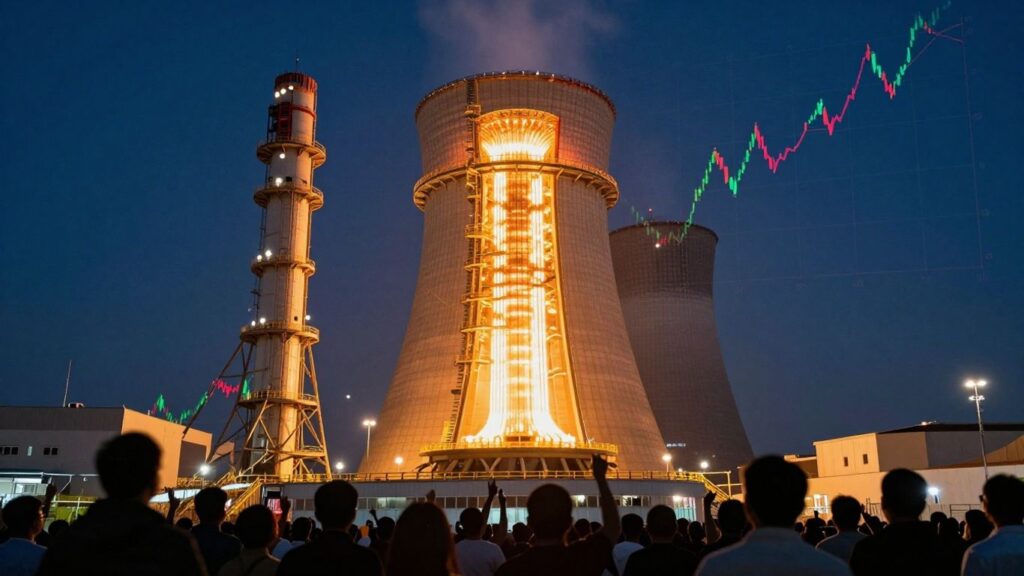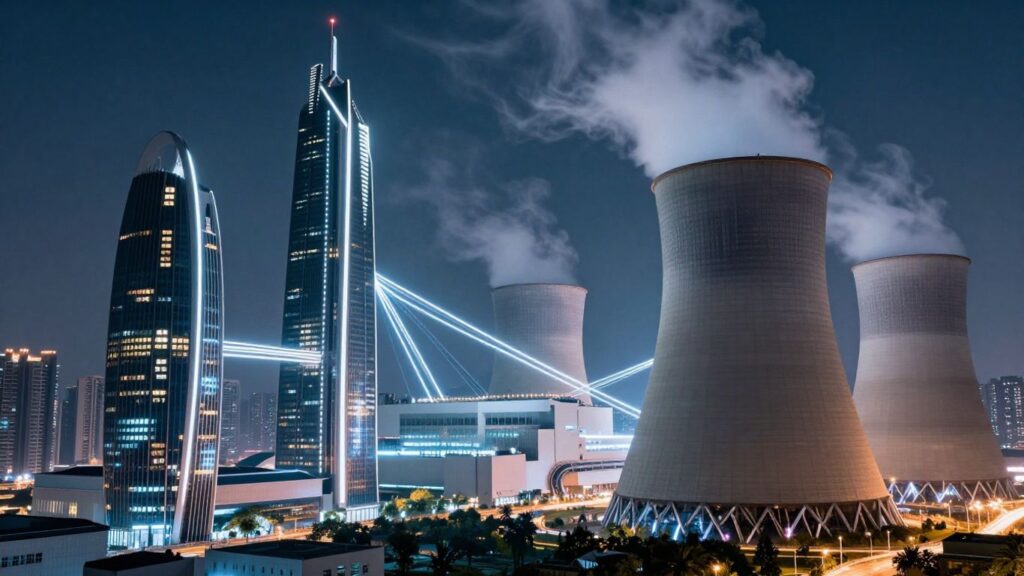

In a significant shift for the energy sector, major technology companies like Microsoft, Google, and Amazon are making substantial investments in nuclear power. This move is driven by the escalating energy demands of artificial intelligence and data centers, prompting a reevaluation of nuclear energy’s role in providing reliable, carbon-free power.
Key Takeaways
- Big Tech is investing billions in nuclear power to meet the immense energy needs of AI and data centers.
- Companies are exploring both restarting existing nuclear facilities and investing in next-generation Small Modular Reactors (SMRs).
- While nuclear offers a consistent power source, concerns remain about SMR development timelines, costs, and waste.
- Critics suggest that renewable energy sources might be a more immediate and cost-effective solution.
The AI Energy Crunch
Artificial intelligence and the proliferation of data centers have created an unprecedented demand for electricity. Tech giants, many of whom have set ambitious net-zero emissions goals, are finding that their existing renewable energy portfolios are insufficient to meet these burgeoning needs. This has led them to seek out more consistent and powerful energy sources, with nuclear power emerging as a primary focus.
Big Tech’s Nuclear Bets
Microsoft has announced plans to purchase power from the Three Mile Island nuclear plant, which is set to restart. Google is partnering with nuclear startup Kairos Power to secure energy from future Small Modular Reactors (SMRs), and Amazon has made similar investments in SMR technology developers like X-Energy. These SMRs are touted as being smaller, potentially cheaper, and faster to build than traditional nuclear reactors, offering a more scalable solution.
Promises and Perils of SMRs
Proponents of SMRs highlight their potential for enhanced safety features and a smaller physical footprint. However, the technology is still largely in the development phase, with many designs yet to be commercially demonstrated. Experts caution that SMRs face significant hurdles in terms of cost, construction timelines, and the unresolved issue of nuclear waste disposal. Some critics argue that the substantial investment in SMRs could be better directed towards existing, cheaper renewable technologies like solar and wind.
A Long-Term Solution for a Growing Problem?
While nuclear power offers a reliable, 24/7 energy supply crucial for data centers, the timeline for SMR deployment remains a significant concern. Experts note that even optimistic projections place SMRs as a solution for the long term, potentially a decade away, while the immediate energy demands from AI are a more pressing, near-term challenge. This has led to questions about whether these investments will adequately address the current energy gap.
The Debate Continues
The rush towards nuclear power by Big Tech underscores the immense energy challenge posed by AI. While the technology offers a path towards carbon-free energy, the practicalities of SMR development and the availability of more immediate renewable solutions continue to fuel a robust debate about the most effective and timely strategies for powering the future.
Sources
- Big Tech goes all-in on nuclear as data centers proliferate, Marketplace.org.
- Microsoft, Google and Amazon turn to nuclear energy to fuel the AI boom, CBC.
- Big Tech’s big bet on nuclear power to fuel artificial intelligence, CBS News.
- Big Tech Embraces Nuclear Power to Fuel AI and Data Centers, IEEE Spectrum.
- US energy firms spend big on data centre power – and more top energy stories, The World Economic Forum.