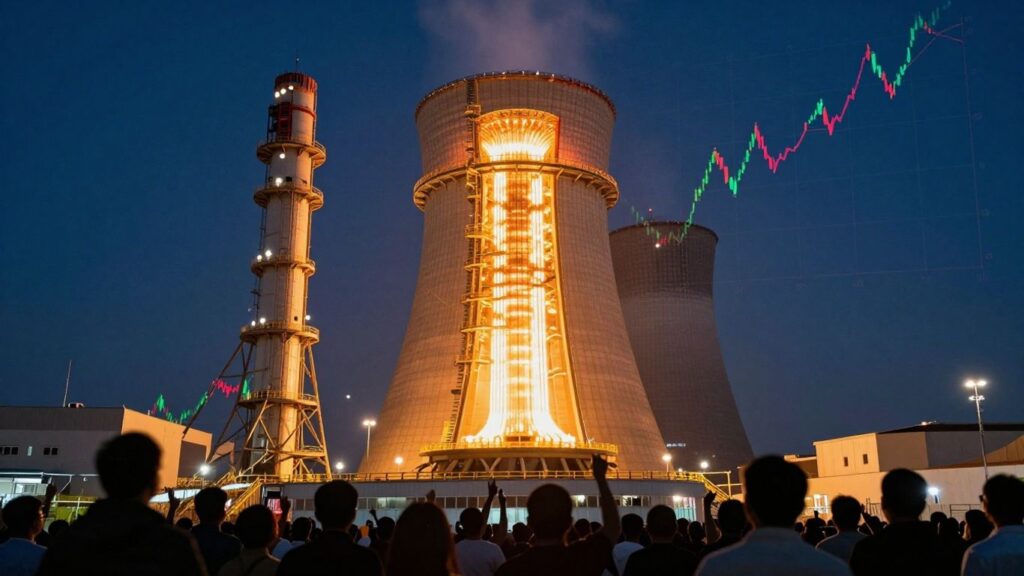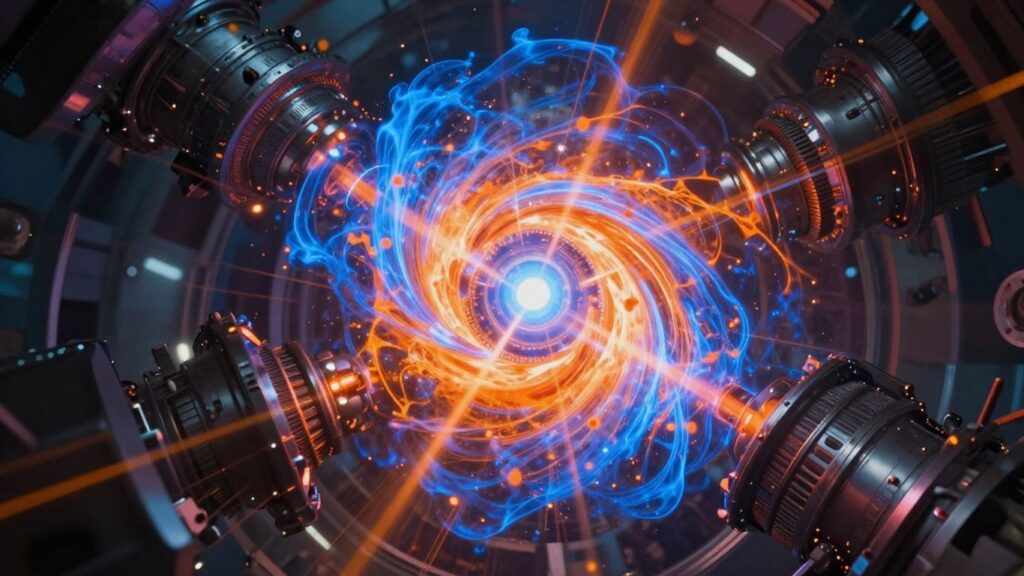

Recent advancements in nuclear fusion research are bringing the long-sought dream of clean, virtually limitless energy closer to reality. Scientists and private companies are making significant strides, overcoming decades-old challenges and paving the way for a potential revolution in global energy production.
Key Takeaways
- Net Energy Gain Achieved: A landmark experiment in December 2022 at the Lawrence Livermore National Laboratory successfully produced more energy from a fusion reaction than was used to initiate it.
- Private Sector Investment Surges: Over $7 billion has been raised by private companies globally, with Commonwealth Fusion Systems (CFS) leading the charge with over $2 billion in funding.
- Technological Innovations: Key advancements include the development of high-temperature superconducting magnets and the streamlining of regulatory processes for fusion reactors.
- Global Race: Nations like China are significantly increasing their investment in fusion research, signaling a global push towards this clean energy source.
The Science Behind Fusion
Nuclear fusion, the process that powers the sun and stars, involves merging two atomic nuclei into a larger one, releasing immense amounts of energy. Unlike nuclear fission, which splits atoms and produces long-lived radioactive waste, fusion offers a cleaner alternative with a high energy yield and minimal waste.
The most promising approach for terrestrial power generation involves fusing deuterium and tritium, isotopes of hydrogen. This process requires heating the fuel to extreme temperatures, around 100 million degrees Celsius, and confining it using powerful magnetic fields, typically within a donut-shaped device called a tokamak.
Recent Breakthroughs and Innovations
A pivotal moment occurred in December 2022 when researchers at the Lawrence Livermore National Laboratory achieved "ignition" – a fusion reaction that yielded more energy than the lasers used to trigger it. This breakthrough, building on years of research, demonstrated the scientific feasibility of net energy gain.
Private companies are now accelerating development. Commonwealth Fusion Systems (CFS) is at the forefront, developing powerful magnets made from high-temperature superconducting tape. These magnets are crucial for stabilizing the superheated plasma within tokamaks. CFS aims to have a fusion power plant connected to the grid by the early 2030s.
The Path to Commercialization
While scientific hurdles have been significant, regulatory advancements are also smoothing the path. The U.S. Nuclear Regulatory Commission is now regulating fusion reactors more like particle accelerators, recognizing their inherent lower risk compared to fission reactors. This streamlined process is expected to accelerate deployment.
Despite the optimism, challenges remain. Scaling up the technology to commercial levels and ensuring cost-competitiveness are key. The fuel sources, deuterium and tritium, are abundant and relatively inexpensive, but the initial infrastructure costs are substantial. Experts anticipate that as the technology matures, costs will decrease, making fusion competitive with other energy sources.
Global Implications and Future Outlook
The potential of fusion energy extends beyond just clean electricity. Proponents suggest it could alleviate geopolitical conflicts tied to fossil fuels and significantly aid in combating climate change. However, the transition to fusion power could also disrupt existing energy markets and geopolitical dynamics, with countries like China making substantial investments.
While the timeline for widespread fusion power remains uncertain, the recent breakthroughs and increasing private and public investment suggest that fusion energy is moving from the realm of science fiction towards a tangible future, potentially reshaping the global energy landscape within the coming decades.
Sources
- A Nuclear Fusion Breakthrough May Be Closer Than You Think, Time Magazine.
- Nuclear fusion news: The science behind the energy technology, The World Economic Forum.
- Scientists Achieve Nuclear Fusion Energy Breakthrough in the US, The New York Times.