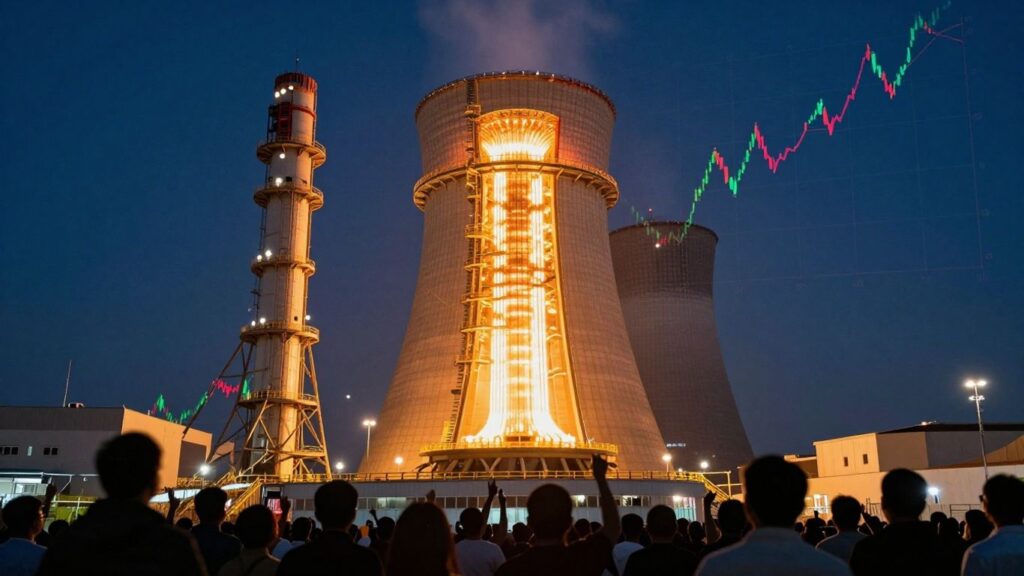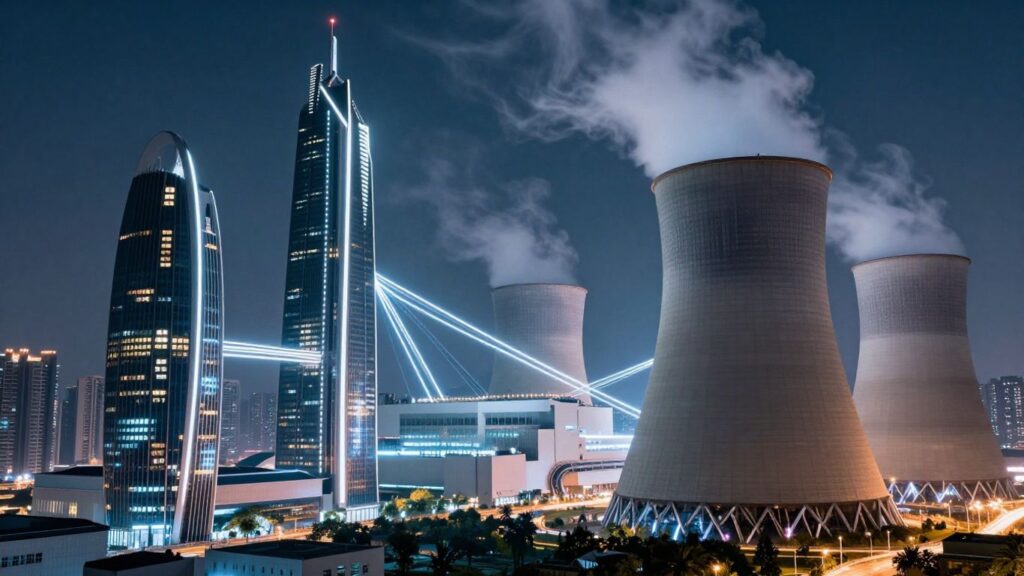

In a significant shift for the energy sector, major technology companies like Amazon, Google, and Microsoft are making substantial investments in nuclear energy. This move is driven by the escalating demand for electricity to power data centers and the burgeoning field of artificial intelligence, which requires vast amounts of reliable, emissions-free power.
Key Takeaways
- Big Tech is investing heavily in nuclear power to meet the immense energy needs of data centers and AI.
- Companies are exploring both existing nuclear plants and next-generation Small Modular Reactors (SMRs).
- Nuclear energy offers a consistent, carbon-free power source, unlike intermittent renewables like solar and wind.
- Challenges remain, including the long development timelines for SMRs and the historical concerns surrounding nuclear power.
The Growing Demand for Power
The proliferation of data centers and the rapid advancements in artificial intelligence have created an unprecedented surge in electricity demand. Traditional energy sources are struggling to keep pace, and renewable energy sources like solar and wind, while valuable, cannot provide the consistent, 24/7 power required by these operations without significant energy storage solutions. This has led tech giants to look towards nuclear power as a stable, carbon-free alternative.
Investing in the Future of Nuclear
Tech companies are pursuing a dual strategy: securing power from existing nuclear facilities and investing in the development of new nuclear technologies, particularly Small Modular Reactors (SMRs). Microsoft has agreed to help revive the Three Mile Island nuclear power plant, while Google and Amazon are investing in startups like Kairos Power and X-Energy, respectively, which are developing SMRs. These smaller, potentially more cost-effective reactors are seen as a promising solution for future energy needs, though they are still in the development phase.
Addressing Concerns and Challenges
While nuclear energy offers a compelling solution for emissions-free, reliable power, challenges persist. The development and deployment of SMRs are complex and time-consuming, with many technologies still existing primarily on paper. Furthermore, historical concerns about nuclear waste disposal and safety, stemming from past accidents, continue to be factors in public perception and regulatory processes. Experts also note that while SMRs are a long-term prospect, the immediate energy demands require solutions that can be implemented more rapidly.
A Paradigm Shift in Energy Strategy
This significant investment by Big Tech signals a major shift in corporate energy strategies. By backing nuclear power, these companies are not only aiming to meet their growing energy needs sustainably but are also playing a crucial role in the potential revitalization and innovation of the nuclear energy sector. The success of these ventures could pave the way for a new era of nuclear power generation, driven by the demands of the digital age.
Sources
- Big Tech goes all-in on nuclear as data centers proliferate, Marketplace.org.
- Amazon, Google and Microsoft Are Investing in Nuclear Power, The New York Times.
- Big Tech’s big bet on nuclear power, CBS News.
- Big Tech Embraces Nuclear Power to Fuel AI and Data Centers, IEEE Spectrum.