

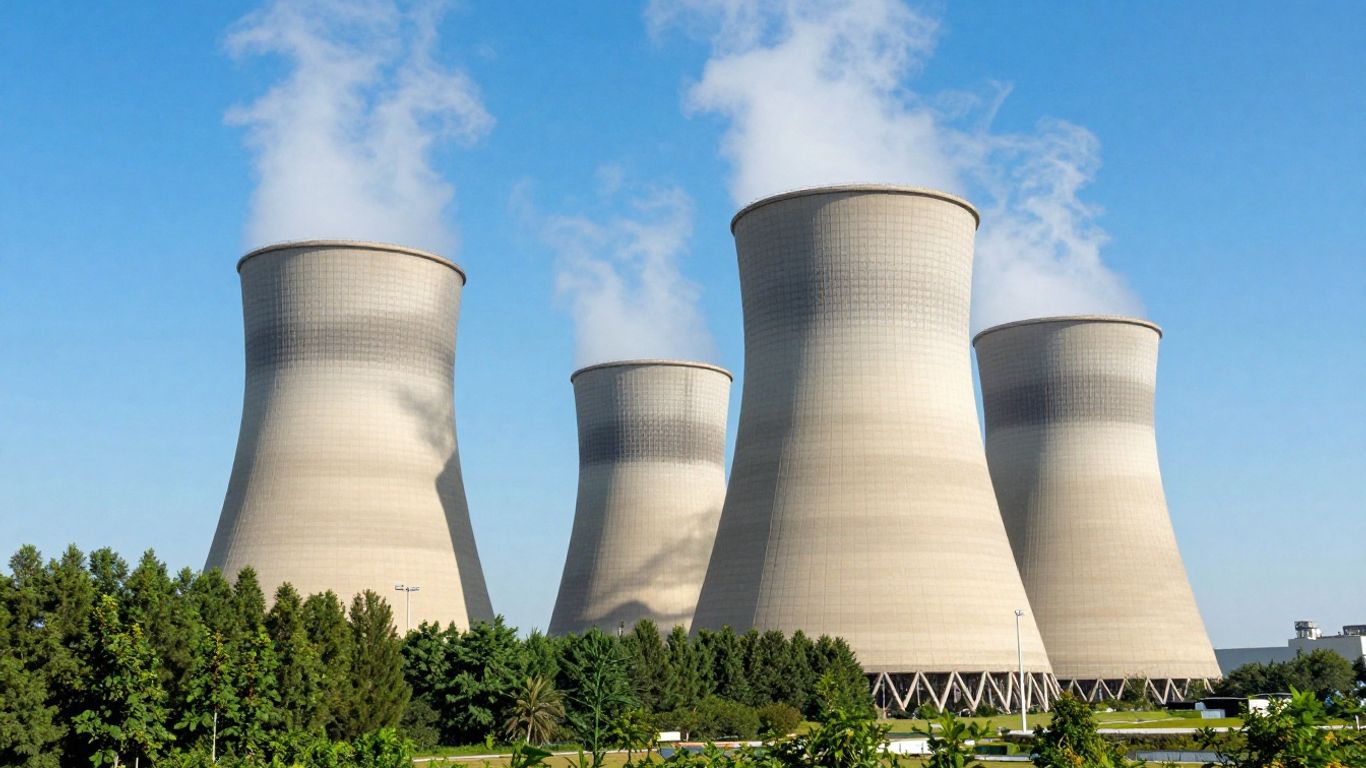
As the world grapples with the urgent need for decarbonization, nuclear energy is increasingly being recognized as a vital component in achieving net-zero emissions by 2050. Discussions at international forums, including recent events involving the IAEA and WEF, highlight nuclear power’s significant role in a just energy transition, offering both environmental benefits and robust economic opportunities.
Key Takeaways
- Nuclear energy is essential for meeting climate goals and achieving net-zero emissions by 2050.
- It provides a reliable, low-carbon baseload power source that complements intermittent renewables.
- The nuclear sector offers high-paying jobs and significant economic multipliers.
- Public perception is shifting, with increased support for nuclear power globally.
- Technological advancements, such as Small Modular Reactors (SMRs), promise further innovation and cost-effectiveness.
Nuclear Power’s Role in Decarbonization
With over 130 countries aiming for net-zero emissions, the transition away from fossil fuels is paramount. Nuclear power plants produce no carbon emissions during operation, making them a critical tool in combating climate change. Unlike intermittent renewable sources like solar and wind, nuclear energy provides a stable, reliable baseload power that ensures energy security. Experts emphasize that achieving ambitious climate targets without nuclear energy would be nearly impossible.
Economic Benefits and Job Creation
Investments in nuclear energy yield substantial economic benefits, creating more jobs than are lost in the transition from fossil fuels. Research presented at IAEA events indicates that nuclear power generates the largest economic multiplier effect among clean energy sources. Furthermore, jobs in the nuclear sector are among the highest paid in the clean energy industry, offering significant and sustainable employment opportunities that benefit local and regional economies. Studies show that nuclear power creates approximately 25% more employment per unit of electricity compared to wind power, with workers earning significantly higher wages.
Shifting Perceptions and Investment
Historically, accidents like Chernobyl and Fukushima have cast a shadow over nuclear energy, leading to underinvestment and public mistrust. However, recent global agreements, such as the one at COP28, have begun to acknowledge nuclear energy’s importance. Public opinion is also shifting, with polls indicating growing support for nuclear power in many countries. This renewed interest is attracting significant private investment, with tech giants increasingly seeking reliable, low-carbon energy sources for their data centers. Governments are also re-evaluating policies, with some countries considering reversing previous phase-outs and others actively investing in new nuclear capacity.
Technological Advancements and the Future
The development of Small Modular Reactors (SMRs) represents a significant advancement in nuclear technology. These smaller, more flexible reactors are expected to be more cost-effective and quicker to deploy, potentially revolutionizing the energy landscape. Companies are actively investing in SMR technology, and international cooperation is fostering innovation and standardization. The growth of the nuclear sector is also driving demand for uranium and creating opportunities across the entire nuclear supply chain, from mining to advanced reactor design and waste management.
Regional Impact and Workforce Development
Regions like Tennessee are experiencing a "nuclear renaissance," with significant economic impacts from existing nuclear facilities and investments in new technologies. Studies highlight the substantial job creation, high wages, and economic output associated with the nuclear industry. To support this growth, educational institutions are developing specialized programs to train the future nuclear workforce, ensuring a skilled labor pool for this critical sector.
Sources
- Nuclear Power Boasts Best Paid Jobs in Clean Energy Sector, International Atomic Energy Agency.
- Why we must embrace nuclear energy to fight climate change, The World Economic Forum.
- Investors should cheer the coming nuclear summer, MoneyWeek.
- ‘Without nuclear, it will be almost impossible to decarbonize by 2050’, UN atomic energy chief, UN News.
- TVA, Kairos invest in nuclear power in Tennessee, Knoxville News Sentinel.