

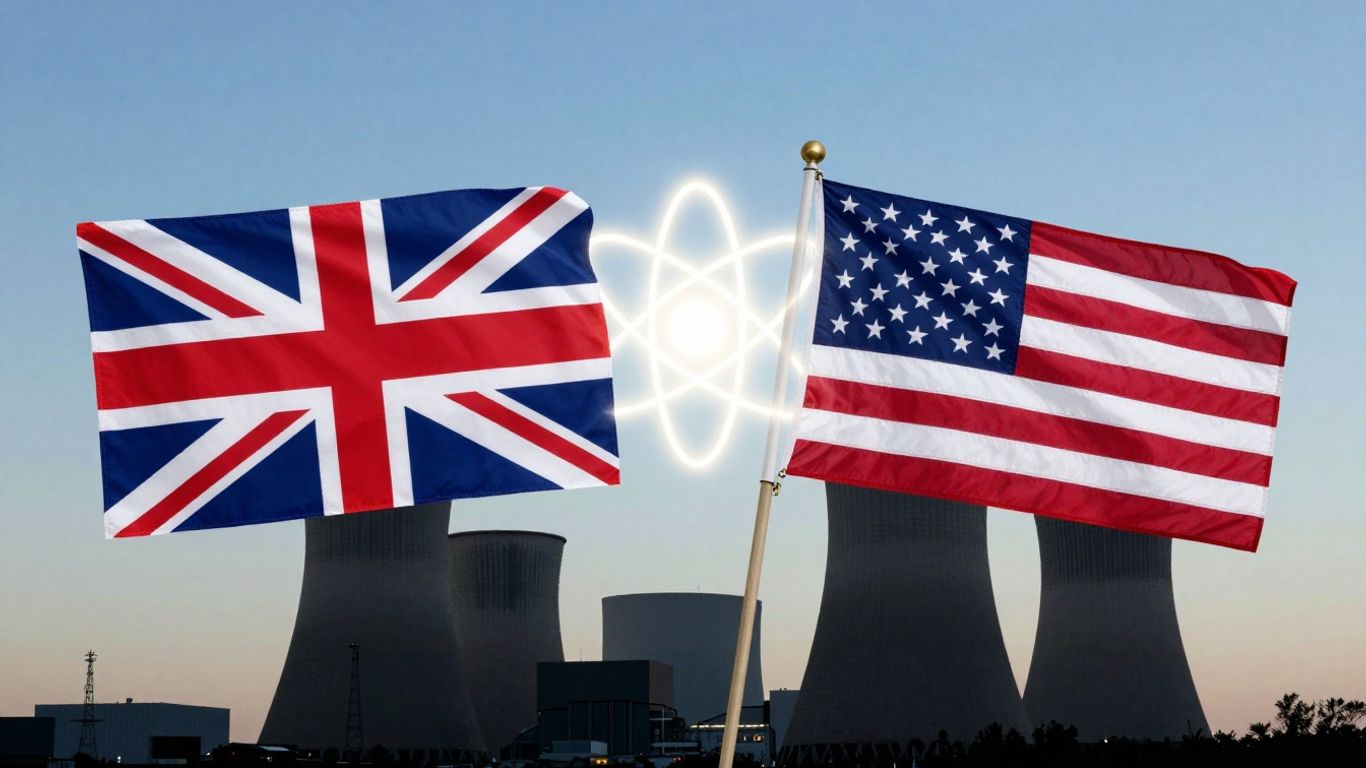
The United Kingdom and the United States have solidified a significant partnership aimed at bolstering energy security and driving economic growth through a new nuclear energy deal. This collaboration is set to accelerate the development of new nuclear power stations in both nations, fostering innovation and creating thousands of jobs.
The "Atlantic Partnership for Advanced Nuclear Energy" is designed to streamline regulatory processes, making it faster and more efficient for companies to build nuclear facilities. This move is a cornerstone of the UK’s "energy superpower" mission, emphasizing clean, homegrown power and reducing reliance on foreign energy sources.
Key Takeaways
- A new UK-US government agreement will expedite the licensing process for nuclear projects, potentially halving the time required.
- Several major commercial deals between UK and US companies are set to unlock billions in private investment for new nuclear projects.
- The partnership aims to enhance energy security by reducing dependencies on Russian nuclear materials.
- Collaboration extends to fusion energy research, leveraging AI for advanced simulation tools.
Boosting Homegrown Energy and Jobs
This landmark agreement is expected to turbocharge the construction of new nuclear power stations, creating substantial employment opportunities. For instance, plans to build up to 12 advanced modular reactors in Hartlepool by X-Energy and Centrica could generate up to 2,500 jobs and deliver an estimated £40 billion in economic value. Similarly, Holtec, EDF, and Tritax plan to develop data centers powered by small modular reactors in Nottinghamshire, a project valued at around £11 billion.
Last Energy and DP World are set to establish one of the world’s first micro modular nuclear power plants, backed by £80 million in private investment, to power the expansion of DP World’s London Gateway port. Furthermore, Urenco and Radiant have signed a deal to supply advanced HALEU fuel to the US market, with Urenco exploring a similar facility in the US.
Accelerating Innovation and Security
The partnership extends beyond traditional nuclear power, encompassing fusion energy research. British and American expertise will be combined with AI technology to develop advanced simulation tools and fast-track progress towards commercial fusion power. A Global Fusion Energy Policy Summit is planned for 2026 in the United States to further this international cooperation.
Crucially, the deal addresses energy security by committing to eliminate any remaining dependencies on Russian nuclear material by the end of 2028. This strategic move aims to further isolate Russia from the global energy market and bolster the resilience of fuel supply chains for both nations.
A "Golden Age" of Nuclear Power
Prime Minister Keir Starmer hailed the partnership as a "golden age of nuclear," emphasizing its role in powering the economy and communities while driving down household bills in the long run. U.S. Secretary of Energy Chris Wright echoed this sentiment, highlighting the "nuclear renaissance" being ushered in by the United States and the importance of strong international partnerships.
The UK’s nuclear sector is experiencing a significant boom, with the Nuclear Industry Association reporting a record 98,000 people employed in the industry. This new era of nuclear development aims to overcome past delays caused by red tape and inaction, positioning the UK as a leading investment destination for nuclear energy.