

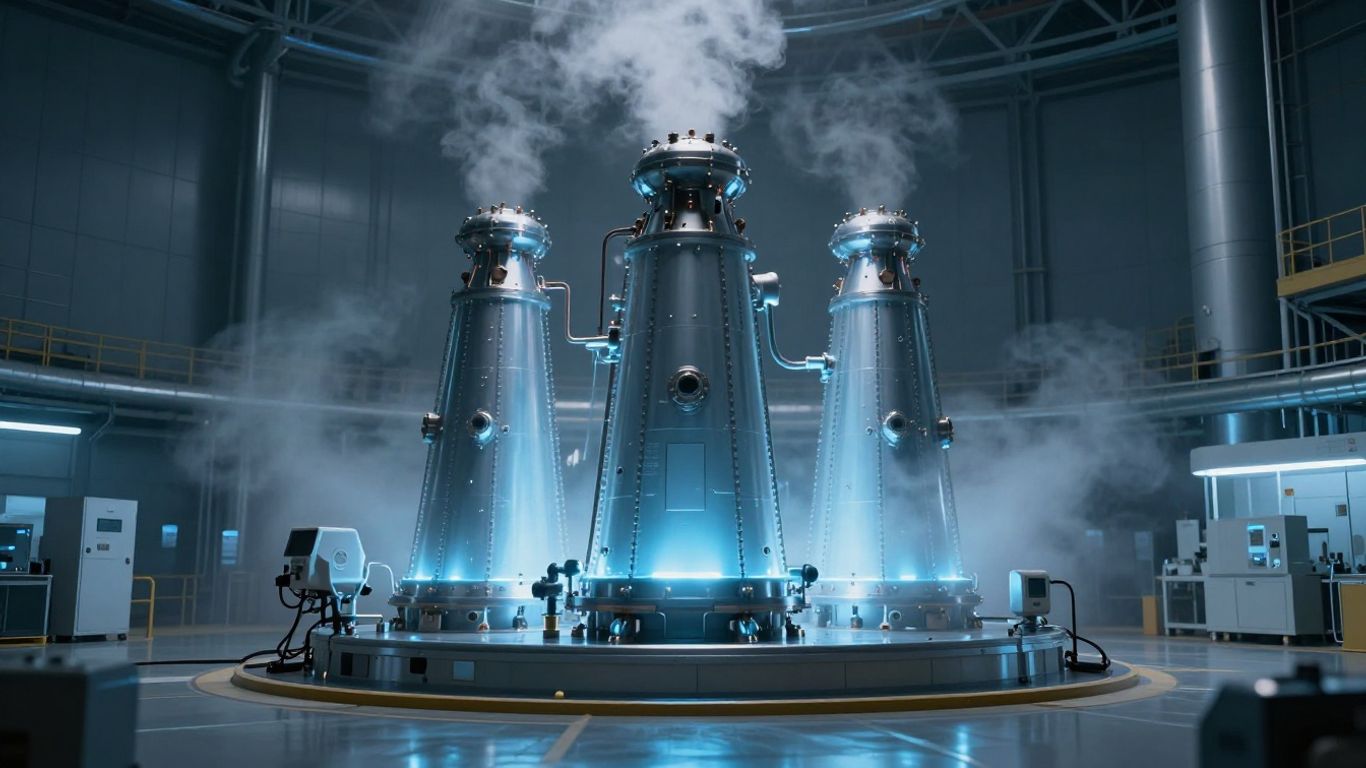
Small Modular Reactors (SMRs) are rapidly gaining attention as a potentially transformative solution for clean, reliable energy. With a focus on smaller, factory-built units, SMRs aim to overcome the cost and timeline challenges associated with traditional large-scale nuclear power plants. This burgeoning technology is poised to play a significant role in global energy strategies.
Key Takeaways
- SMRs offer a more cost-effective and quicker-to-deploy alternative to traditional large nuclear reactors.
- The UK is set to pioneer the first SMR project in North Wales, signaling a significant investment in nuclear energy.
- Governments and private entities are increasingly backing SMR development, recognizing their potential for energy independence and economic growth.
The Promise of SMRs
Traditional large nuclear reactors, while providing clean energy, have often been plagued by substantial delays and cost overruns. This has made them less competitive and strategically challenging for many nations. Small Modular Reactors, typically ranging from 1 MW to 300 MW, offer a different approach. Their modular design allows for scalability and factory production, which can lead to significant cost reductions through economies of scale. This makes them an attractive option for a variety of energy needs, including powering data centers and contributing to national energy security.
Global Momentum and UK Leadership
Globally, countries like China and Russia are actively pursuing SMR technology. In the UK, North Wales has been selected as the site for the nation’s first SMR nuclear power station at Wylfa. This project, spearheaded by publicly-owned Great British Energy-Nuclear and designed by Rolls-Royce SMR, is expected to create thousands of jobs and represent a major industrial investment for the region. The UK government views this as a crucial step in its mission to become a clean energy superpower, aiming to deliver power for millions of homes and enhance energy independence.
Addressing Development Challenges
Despite the promise, SMR development faces several risks, including technological uncertainties, market fluctuations, supply chain availability, and regulatory hurdles. The long development cycles for nuclear technology magnify these challenges. To navigate this, a coordinated strategy is essential, involving government support across all stages of development, from research and development to scale-up. This includes streamlining regulatory processes, fostering international cooperation, and ensuring sustained bipartisan political backing. The UK’s initiative, alongside collaborations with countries like the US and Czechia, highlights a growing international effort to accelerate SMR deployment.