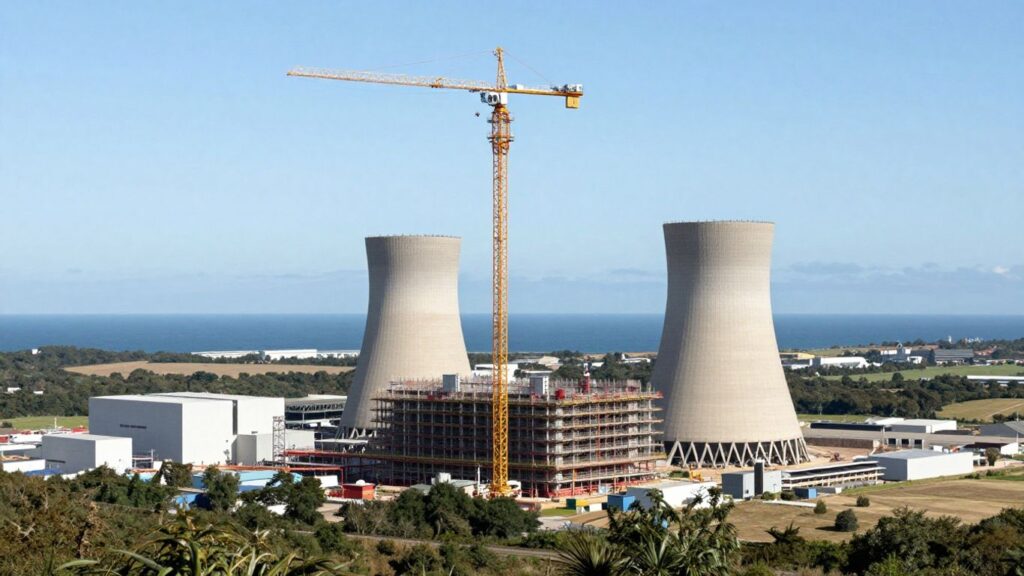

The United Kingdom government has announced a significant investment of £14.2 billion towards the construction of the Sizewell C nuclear power plant in Suffolk. This major financial commitment aims to bolster the nation’s energy security, create thousands of jobs, and accelerate the transition to clean energy, marking a pivotal moment for the country’s nuclear program.
Key Takeaways
- The UK government is investing £14.2 billion in the Sizewell C nuclear power plant.
- The project is expected to generate enough energy to power six million homes.
- It will create 10,000 direct jobs during peak construction and thousands more in the supply chain.
- The government aims to secure a "golden age" of clean energy and reduce reliance on fossil fuels.
- Concerns remain regarding the project’s overall cost and potential impact on consumer bills.
Government Backs Sizewell C for Energy Security and Economic Growth
The substantial government investment is positioned as a landmark decision to "kickstart" economic growth and ensure a stable supply of clean, homegrown energy. Energy Secretary Ed Miliband highlighted the project’s role in moving the UK away from "insecure, expensive and volatile fossil fuels," emphasizing its contribution to tackling the climate crisis. The project is intended to replicate the Hinkley Point C nuclear power station, with expectations that it can be built more cost-effectively and swiftly.
Project Details and Investment Structure
Sizewell C is slated to provide clean power for approximately six million homes for at least six decades. Analysis suggests the project could lead to system-wide savings of around £2 billion annually once operational, potentially lowering consumer bills. The government will become the largest shareholder with a 44.9% stake, alongside private investors including EDF, Centrica, La Caisse, and Amber Infrastructure. The project’s funding model aims to spread the estimated £38 billion cost across consumers, taxpayers, and private investors, with the government’s investment designed to limit the impact on consumer bills to an average of around £1 per month during construction.
Job Creation and Economic Impact
During its peak construction phase, Sizewell C is projected to support 10,000 jobs directly and thousands more within the nationwide supply chain. The project anticipates awarding 70% of its construction value to British businesses, with an estimated 3,500 UK companies involved in its supply chain. Furthermore, 1,500 apprenticeships are expected to be created, fostering skills development across various sectors.
Opposition and Concerns
Despite the government’s backing, the Sizewell C project faces opposition. Critics, such as Alison Downes, director of the pressure group Stop Sizewell C, have raised concerns about the project’s escalating costs and the lack of transparency regarding negotiations with private investors. There are fears that the project could ultimately increase consumer bills, drawing comparisons to other large-scale infrastructure projects that have faced budget disputes and delays.
Broader Energy Strategy
The investment in Sizewell C is part of a wider government strategy to revitalize the UK’s nuclear power capacity. With most of the existing nuclear fleet due for decommissioning by 2030, new projects like Sizewell C are seen as crucial for maintaining a low-carbon energy supply. The government is also investing in research and development for fusion energy and its defense nuclear sector, signaling a comprehensive approach to future energy needs.