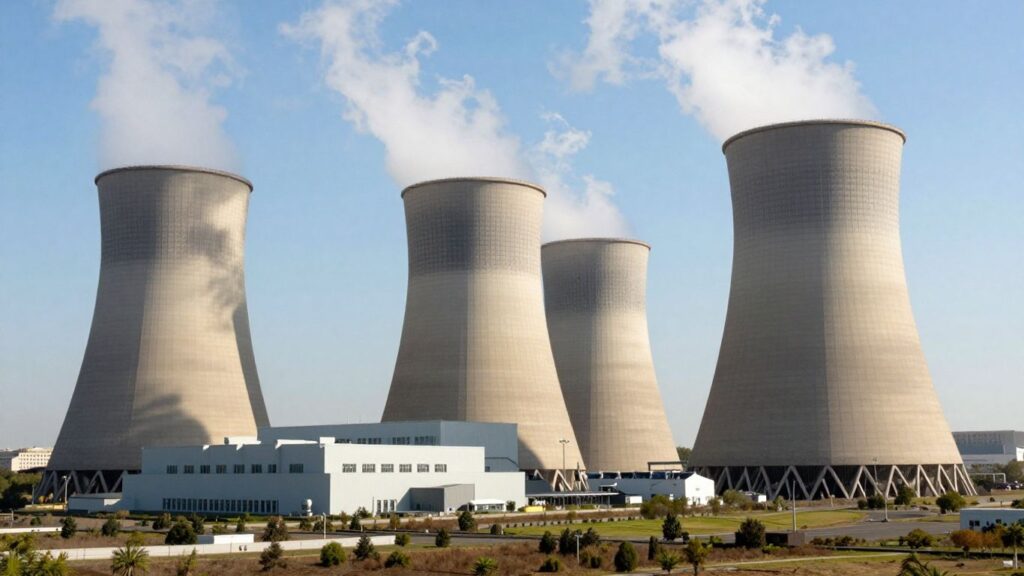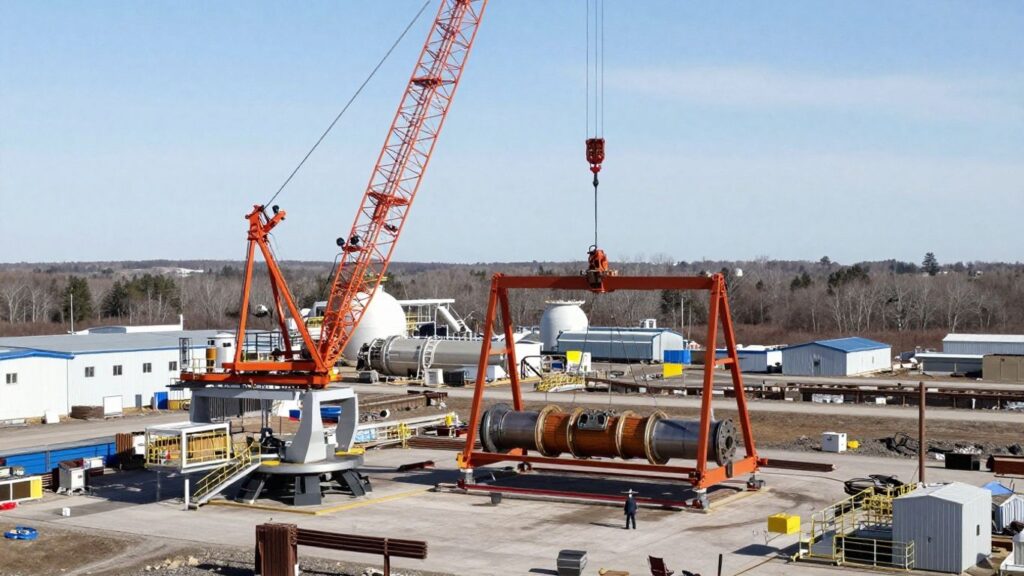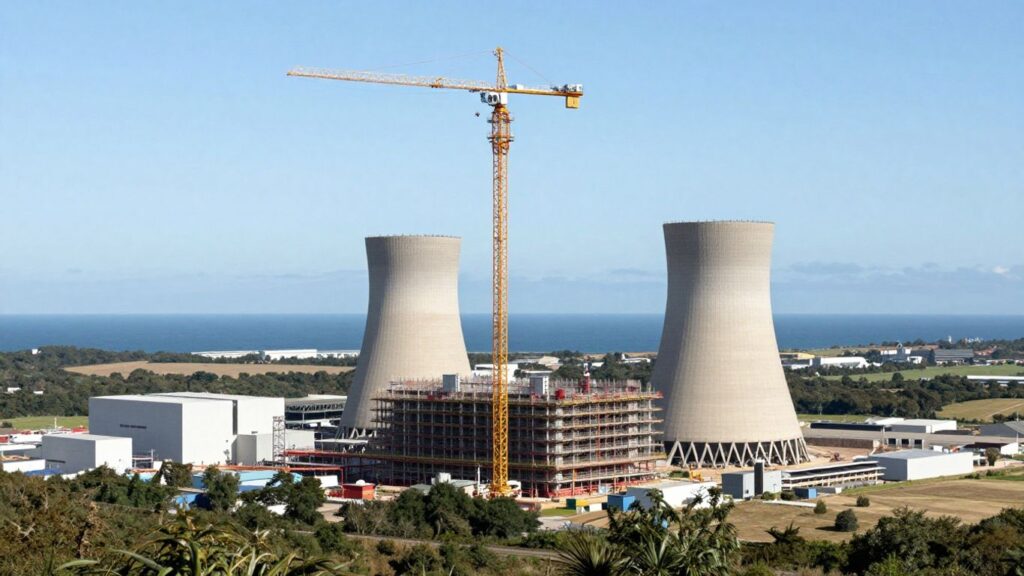

The United Kingdom is set to usher in a new era of nuclear power with significant government investments aimed at bolstering energy security, creating jobs, and reducing energy bills. The nation is prioritizing the development of Small Modular Reactors (SMRs) and has given the green light to large-scale projects, marking the most substantial expansion of nuclear power in seven decades.
Key Takeaways
- Wylfa in North Wales selected as the site for the UK’s first Small Modular Reactor (SMR) nuclear power station.
- Sizewell C receives final investment decision, securing multi-billion-pound funding for a major clean energy project.
- The UK aims to quadruple its nuclear power capacity by 2050, reaching 24GW.
- Significant investment in domestic production of advanced nuclear fuel (HALEU) to reduce reliance on Russia.
- New UK-US agreements aim to accelerate the construction of nuclear power plants in both countries.
Wylfa to Pioneer UK’s First Small Modular Reactors
The historic site of Wylfa on Anglesey, North Wales, has been chosen to host the UK’s first Small Modular Reactor (SMR) nuclear power station. This development is anticipated to be the most significant industrial investment in North Wales for a generation, creating up to 3,000 new jobs and injecting billions of pounds into the local economy over the next decade. The project, backed by publicly-owned Great British Energy-Nuclear and designed by Rolls-Royce SMR, signifies a commitment to building advanced, smaller, and quicker-to-construct nuclear reactors. These SMRs are expected to power approximately 3 million homes, contributing to the UK’s energy independence and its mission to become a clean energy superpower.
Sizewell C Secures Final Investment Decision
In a major step towards enhancing the nation’s energy infrastructure, the Sizewell C nuclear power station in Suffolk has received its final investment decision. This multi-billion-pound project will provide clean power equivalent to that used by 6 million homes and is projected to support 10,000 jobs at its peak construction phase. The government will become the largest shareholder, alongside private investors, in a move designed to deliver electricity system savings of approximately £2 billion annually once operational. The project aims to be built for around 20% less than its predecessor, Hinkley Point C, reflecting a strategic approach to economic growth and protecting household finances.
Ambitious Expansion of Nuclear Capacity
The UK government has unveiled a roadmap for the biggest expansion of nuclear power in 70 years, with the goal of quadrupling nuclear capacity to 24GW by 2050. This ambitious plan includes exploring the development of a new gigawatt-scale power station comparable in size to Hinkley Point C and Sizewell C. Furthermore, the UK is set to become the first country in Europe to launch a high-tech nuclear fuel program, investing up to £300 million in domestic production of HALEU (High-Assay Low-Enriched Uranium) fuel, currently primarily produced in Russia. This initiative aims to push Russia out of the global market and secure the UK’s fuel supply chain.
Strengthening International Nuclear Cooperation
Alongside domestic investments, the UK is deepening its collaboration with the United States on nuclear energy. A new agreement between the two nations is set to expedite the licensing and construction of nuclear power stations, potentially reducing approval times significantly. This partnership is enabling major commercial deals, including plans for advanced modular reactors in Hartlepool and other sites across the UK. The collaboration extends to fusion energy research, aiming to accelerate progress towards commercial fusion power and strengthen global energy security by reducing reliance on Russian nuclear materials.
Job Creation and Economic Growth
These significant investments in nuclear power are expected to create tens of thousands of skilled jobs across the country, from construction and manufacturing to engineering and operations. The development of SMRs and large-scale projects, coupled with advancements in fuel production, is poised to revitalize industrial heartlands, foster innovation, and position the UK as a global leader in clean energy technology. The government’s strategy emphasizes building a robust domestic supply chain, ensuring that a substantial portion of the investment benefits British businesses and workers.
Sources
- North Wales to pioneer UK’s first small modular reactors, GOV.UK.
- Wylfa nuclear power plant plans go ahead, creating Anglesey jobs, BBC.
- Golden age of nuclear delivers UK-US deal on energy security, GOV.UK.
- Sizewell C gets green light with final investment decision, GOV.UK.
- Biggest expansion of nuclear power for 70 years to create jobs, reduce bills and strengthen Britain’s energy
security, GOV.UK.