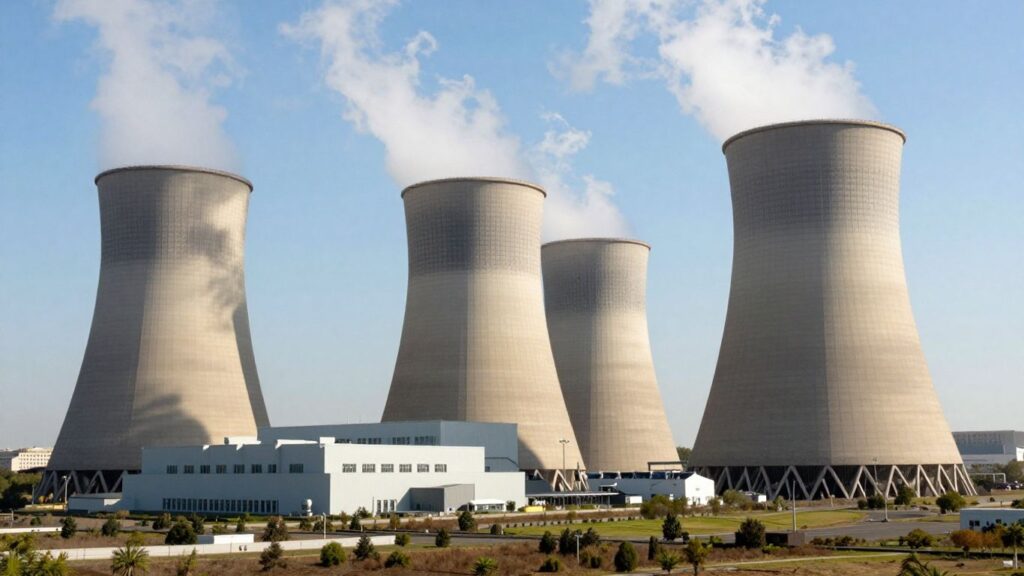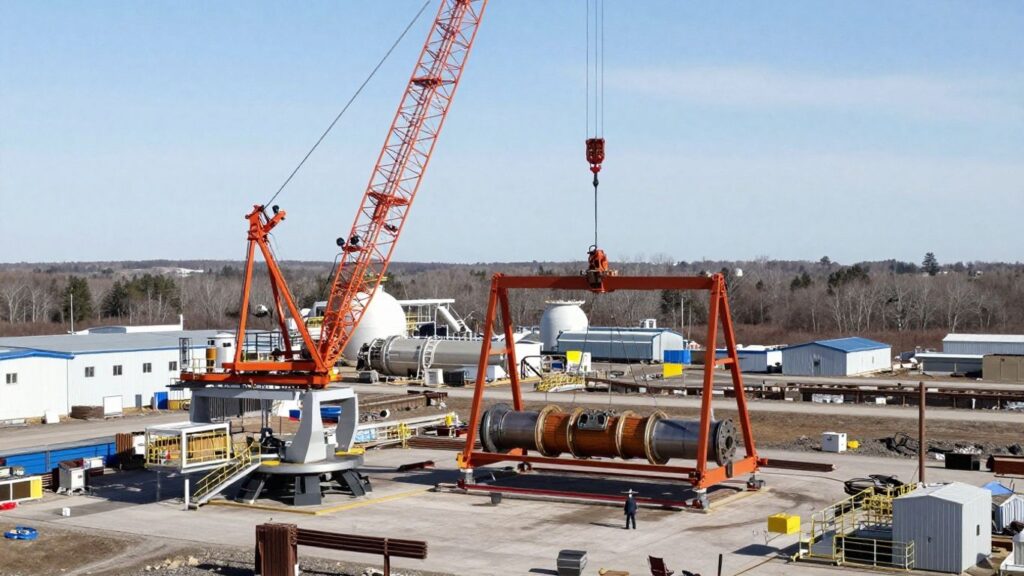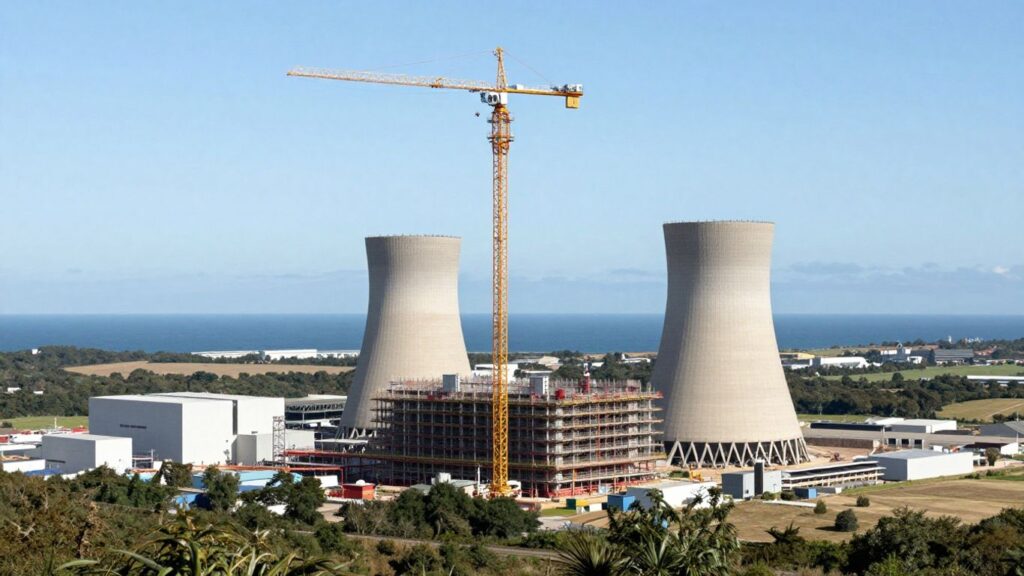


The United Kingdom and the United States have solidified a landmark partnership aimed at ushering in a "golden age" of nuclear energy. This collaboration seeks to bolster energy security, drive significant private investment, and create thousands of jobs in both nations through the accelerated development of new nuclear power plants and advanced reactor technologies.
Key Takeaways
- A new UK-US government agreement will streamline the licensing process for nuclear projects, potentially halving approval times.
- Multiple commercial deals between US and UK companies are set to turbocharge the construction of new nuclear power stations.
- The partnership extends to fusion energy research and aims to eliminate reliance on Russian nuclear materials.
A New Era for Nuclear Power
The "Atlantic Partnership for Advanced Nuclear Energy" is designed to make it quicker and easier for companies to build new nuclear power stations. By speeding up the licensing process from several years to approximately two, the agreement aims to unlock billions in private investment and accelerate the deployment of clean, homegrown energy.
This initiative is central to the UK’s "energy superpower" mission, focusing on energy security and reducing dependence on volatile global energy markets. The collaboration builds on existing ties, with new commercial deals poised to significantly expand nuclear projects in both countries.
Major Commercial Agreements and Projects
Several significant commercial deals have been announced as part of this partnership:
- X-Energy and Centrica: Plans to construct up to 12 advanced modular reactors (AMRs) in Hartlepool, with a potential UK-wide fleet of 6GW. This project alone is estimated to create up to 2,500 jobs and generate £40 billion in economic value.
- Holtec, EDF, and Tritax: Development of advanced data centers powered by small modular reactors (SMRs) at the former Cottam coal-fired power station, valued at approximately £11 billion.
- Last Energy and DP World: Establishment of one of the world’s first micro modular nuclear power plants to support the expansion of DP World’s London Gateway port.
- Urenco and Radiant: A deal worth around £4 million to supply advanced High-Assay Low-Enriched Uranium (HALEU) fuel to the US market, with plans for new fuel facilities in both countries.
- TerraPower and KBR: Studies and site evaluations for the deployment of TerraPower’s Natrium advanced reactor technology in the UK.
Boosting Jobs and Economic Growth
These developments are expected to create a significant number of high-skilled jobs across the UK, particularly in industrial heartlands. The government highlights that the nuclear sector already employs a record 98,000 people in the UK, and this expansion is set to further boost employment and economic value.
Collaboration in Fusion Energy
The partnership also extends to the field of fusion energy. British and American expertise will be combined with AI technology to develop advanced simulation tools, accelerating progress towards commercial fusion power. A Global Fusion Energy Policy Summit is planned for 2026 in the United States to foster international cooperation.
Enhancing Energy Security
A key objective of the collaboration is to eliminate any remaining dependencies on Russian nuclear material by the end of 2028. This move aims to strengthen the resilience of fuel supply chains and reduce reliance on potentially hostile energy sources, further enhancing global energy security.