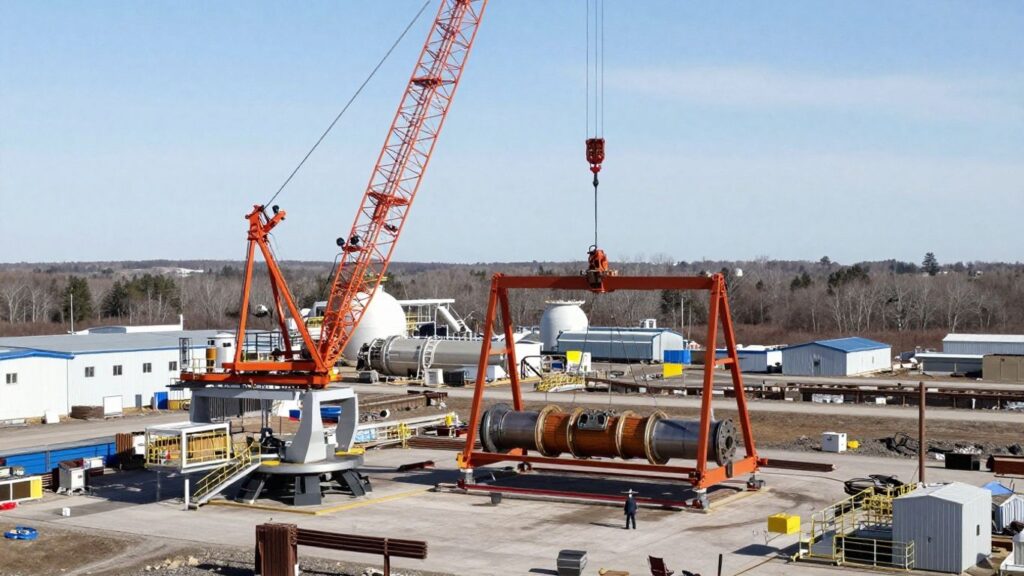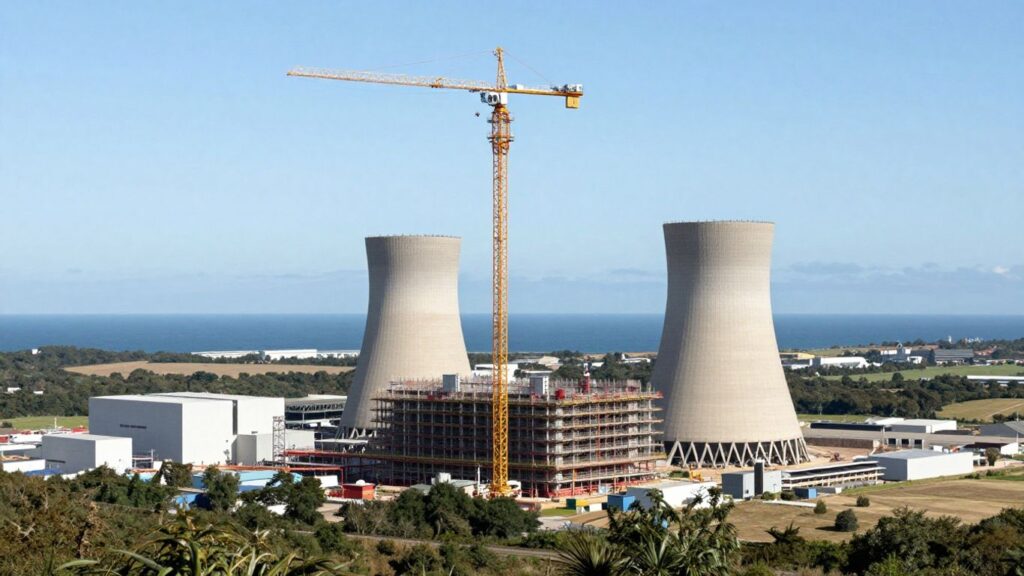


Recent advancements in nuclear fusion technology are bringing the long-sought dream of clean, virtually limitless energy closer to reality. Companies like Commonwealth Fusion Systems are making significant strides, utilizing innovative superconducting magnets and streamlined regulatory processes to accelerate the development of fusion power plants. This progress signals a potential paradigm shift in global energy production, promising to reshape economies and address climate change.
Key Takeaways
- Fusion energy, the process powering stars, involves fusing atomic nuclei to release vast amounts of energy.
- Recent breakthroughs, including net energy gain demonstrations, have moved fusion from theoretical possibility to commercial viability.
- Private investment and innovative approaches are accelerating development, with pilot plants expected in the coming years.
- Fusion offers a carbon-free, abundant energy source with the potential to revolutionize global power grids and economies.
The Dawn of Commercial Fusion
For decades, nuclear fusion has been considered the "holy grail" of clean energy, promising abundant power with minimal waste. Now, thanks to significant technological leaps and increased private investment, commercial fusion power plants are on the horizon. Companies like Commonwealth Fusion Systems (CFS) are at the forefront, developing compact fusion devices utilizing high-temperature superconducting magnets. These magnets are crucial for containing the superheated plasma needed for fusion reactions, which occur at temperatures exceeding 100 million degrees Celsius.
Accelerating Development and Overcoming Hurdles
Unlike previous government-led efforts, the current wave of fusion development is heavily driven by private companies aiming for rapid commercialization. This shift has led to innovative approaches, including streamlined manufacturing processes and a focus on adaptable technologies. Furthermore, regulatory bodies are adapting, with new frameworks designed to expedite the deployment of fusion reactors, treating them more like less risky particle accelerators than traditional fission plants. This regulatory progress is vital for enabling fusion to contribute to the grid sooner than anticipated.
Economic and Geopolitical Implications
The potential impact of fusion energy extends far beyond power generation. Economically, it could lead to trillions of dollars in global GDP growth, offering affordable and reliable energy to regions that need it most. Geopolitically, a world powered by fusion could see reduced reliance on fossil fuels, potentially alleviating international conflicts and fostering greater energy independence. The race to commercialize fusion is global, with nations like China, the UK, and Germany investing heavily in research and development.
The Road Ahead
While the progress is remarkable, challenges remain. Scaling up fusion technology to meet global energy demand, ensuring cost-competitiveness, and managing the transition from existing energy infrastructure are significant tasks. However, the recent breakthroughs and the growing momentum suggest that fusion energy is no longer a distant dream but an achievable reality that could fundamentally transform our world in the coming decades.
Sources
- A Nuclear Fusion Breakthrough May Be Closer Than You Think, Time Magazine.
- Is the world ready for the transformational power of fusion?, The World Economic Forum.
- Nuclear fusion news: The science behind the energy technology, The World Economic Forum.