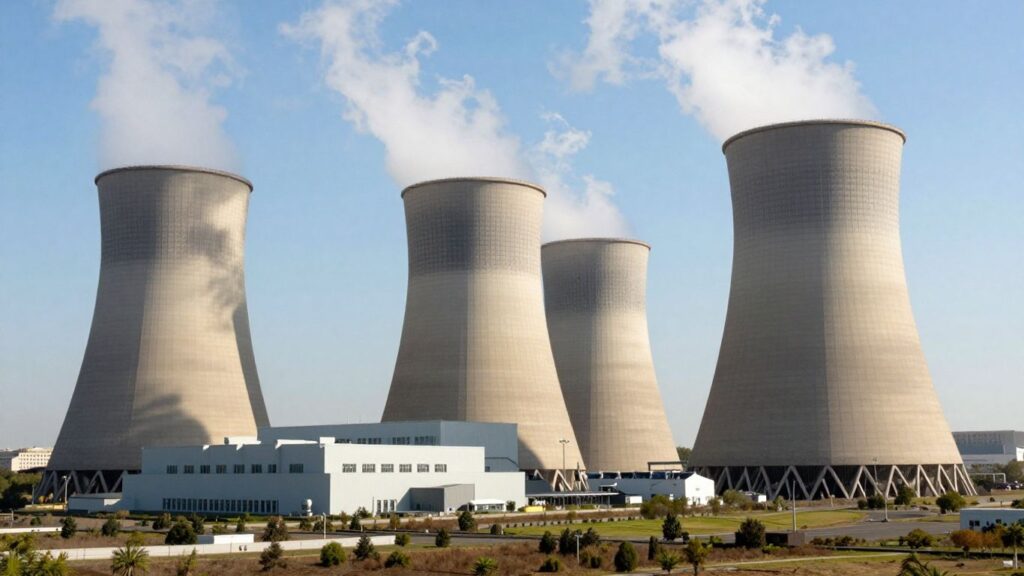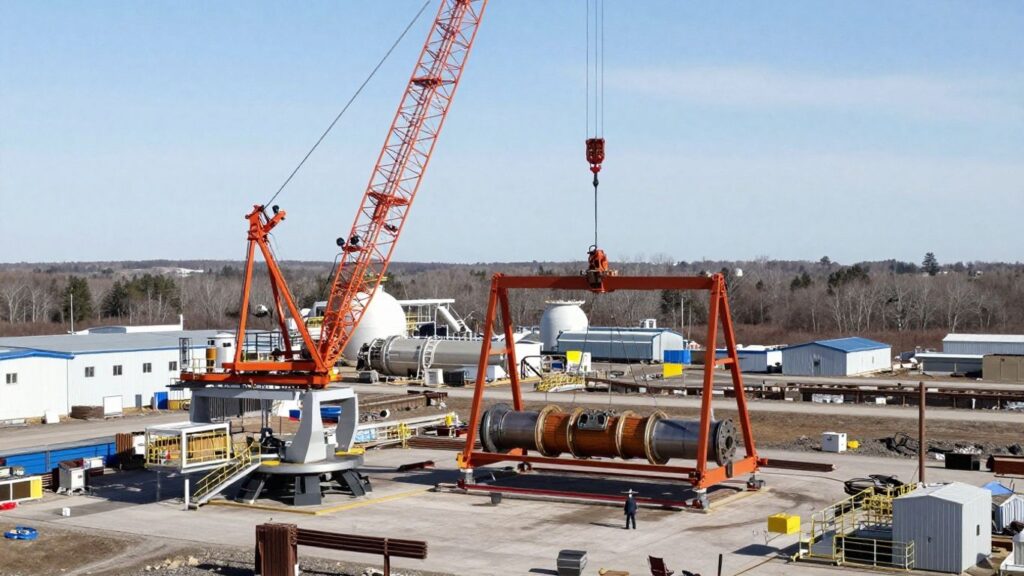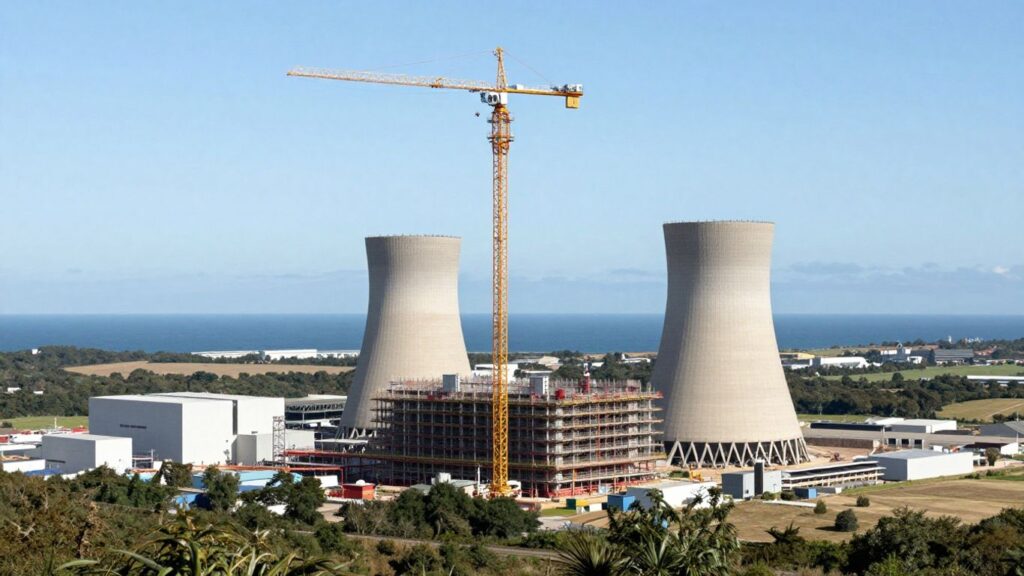

The dream of clean, virtually limitless energy from nuclear fusion is rapidly moving from science fiction to reality. Companies like Commonwealth Fusion Systems (CFS), an MIT spinout, are spearheading the development of the world’s first commercial fusion power plants, with the first expected to come online in the early 2030s. This advancement promises to reshape the global energy landscape, offering a powerful solution to meet rising energy demands while combating climate change.
Key Takeaways
- The first commercial fusion power plant is slated for operation in the early 2030s, with CFS planning one in Virginia.
- Fusion technology, powered by high-temperature superconducting magnets, offers a path to abundant, carbon-free electricity.
- Significant private investment and government support are accelerating the race to commercialize fusion energy.
- Fusion has the potential to drastically reduce energy costs and reshape global geopolitics.
The Dawn of Commercial Fusion
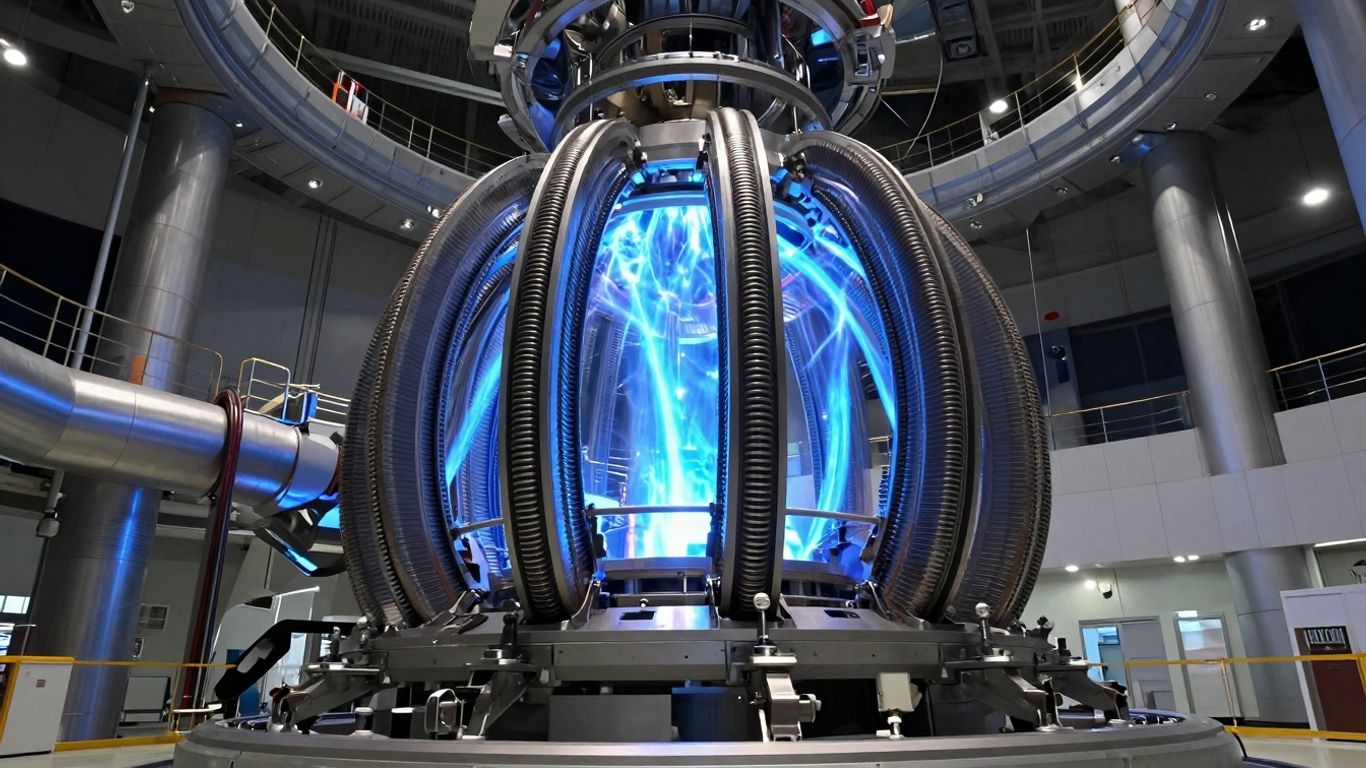
For decades, nuclear fusion has been the elusive "holy grail" of clean energy, promising to replicate the sun’s power on Earth. The core principle involves fusing light atomic nuclei, like deuterium and tritium, to release vast amounts of energy with minimal waste. Recent breakthroughs, particularly in high-temperature superconducting magnets, have overcome previous engineering hurdles, making compact and economically viable fusion reactors a tangible possibility.
Commonwealth Fusion Systems (CFS) is at the forefront of this revolution. The company is developing its SPARC demonstration machine, expected to achieve net energy production in 2027, paving the way for its first commercial power plant, ARC. This plant, planned for Chesterfield County, Virginia, aims to generate 400 megawatts of clean electricity by the early 2030s, enough to power approximately 150,000 homes.
Accelerating the Fusion Race
The fusion industry has seen a surge in private investment, with companies raising billions of dollars. This influx of capital, coupled with government support and streamlined regulatory processes, is accelerating development. The U.S. government, through sustained investment in basic science and energy research, has played a crucial role. International efforts are also gaining momentum, with countries like China, the UK, Germany, and Japan actively pursuing fusion technology.
The Transformative Potential of Fusion
Fusion energy offers a compelling solution to two of the world’s most pressing challenges: meeting exponentially growing energy demand and achieving net-zero emissions. Unlike variable renewable sources like solar and wind, fusion power plants can provide consistent, 24/7 electricity. The fuel sources, isotopes of hydrogen derived from seawater, are abundant and virtually inexhaustible.
Beyond environmental benefits, fusion has the potential to significantly reduce energy costs, boost global economic competitiveness, and reshape geopolitical dynamics by reducing reliance on fossil fuels. The technology is also seen as critical for powering energy-intensive applications like artificial intelligence data centers.
Challenges and the Road Ahead
While the progress is remarkable, challenges remain. Achieving sustained, net-positive energy production in a commercially viable manner requires continued engineering and scientific innovation. The cost of electricity from early fusion plants is still being determined, though projections suggest it will become increasingly competitive over time. Furthermore, integrating this new energy source into existing grids and regulatory frameworks will require careful planning and adaptation.
Despite these hurdles, the momentum behind fusion energy is undeniable. The rapid advancements and significant investments signal that a future powered by fusion is no longer a distant aspiration but an approaching reality.
Sources
- A Nuclear Fusion Breakthrough May Be Closer Than You Think, Time Magazine.
- Is the world ready for the transformational power of fusion?, The World Economic Forum.
- Nuclear fusion news: The science behind the energy technology, The World Economic Forum.
- MIT spinout Commonwealth Fusion Systems unveils plans for the world’s first fusion power plant, MIT News.