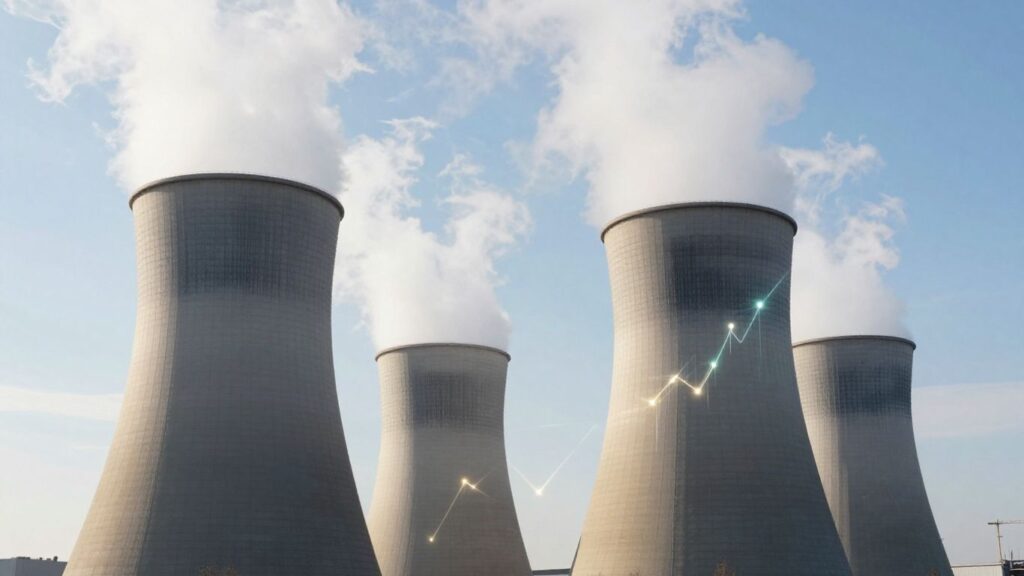


In a landmark achievement for clean energy, scientists have successfully produced more energy from a nuclear fusion reaction than was used to initiate it. This "net energy gain" marks a pivotal moment, potentially paving the way for a future powered by a virtually limitless, carbon-free energy source.
Key Takeaways
- A fusion reaction at the Lawrence Livermore National Laboratory achieved net energy gain for the first time.
- This breakthrough signifies a major step towards fusion becoming a viable energy source.
- While commercialization is still decades away, the achievement overcomes a fundamental scientific hurdle.
- Private investment in fusion energy startups has surged in recent years.
A Historic Breakthrough
For the first time in history, a controlled fusion experiment has yielded more energy than was consumed to start the reaction. This monumental feat, achieved at the Lawrence Livermore National Laboratory in California, represents a critical validation of decades of research and development in the pursuit of fusion power.
Fusion, the process that powers the sun, involves forcing atomic nuclei together to release vast amounts of energy. Unlike nuclear fission, which powers current nuclear plants, fusion produces no carbon emissions and generates significantly less long-lasting radioactive waste.
The Path Forward
While this scientific success is being celebrated globally, experts caution that large-scale commercialization of fusion power is still likely decades away. Significant engineering challenges remain, including the need to achieve numerous fusion ignition events per minute and develop robust systems to harness the energy efficiently.
However, the achievement of net energy gain is crucial. It demonstrates that the fundamental physics are sound, removing a major obstacle and unlocking further investment and interest in the field. Companies like Commonwealth Fusion Systems are actively working on developing fusion power plants, with some aiming to deliver power to the grid in the early 2030s.
Growing Investment and Future Potential
The fusion energy sector has seen a dramatic increase in private investment, with billions of dollars poured into startups. This surge is driven by growing concerns about climate change and energy security, as well as the potential for fusion to provide a clean, abundant, and sustainable energy source.
If successfully commercialized, fusion energy could revolutionize the global energy landscape, offering a powerful tool in the fight against climate change and potentially reshaping geopolitical dynamics. The journey from scientific breakthrough to widespread energy production is long, but this milestone marks a significant leap forward.