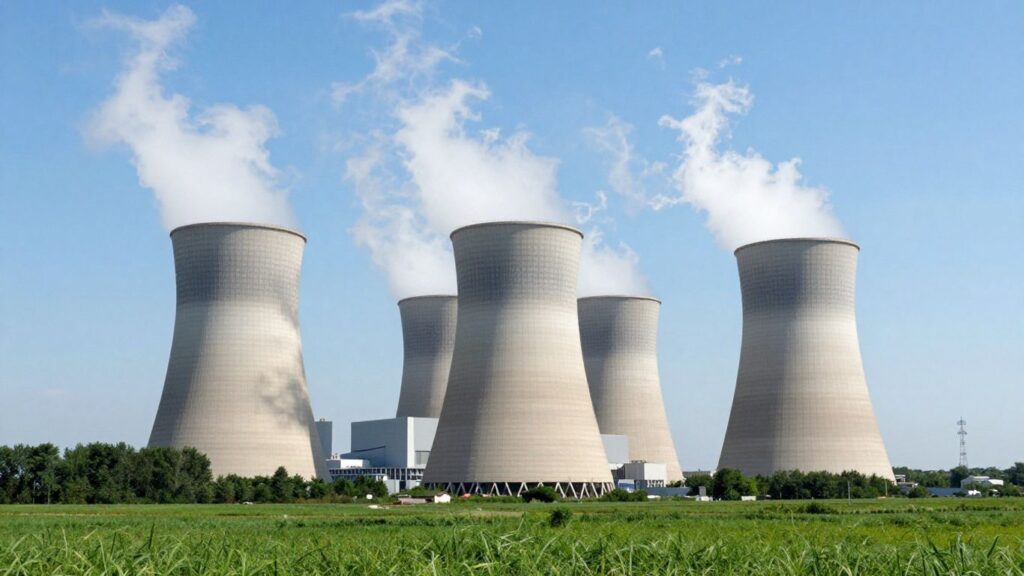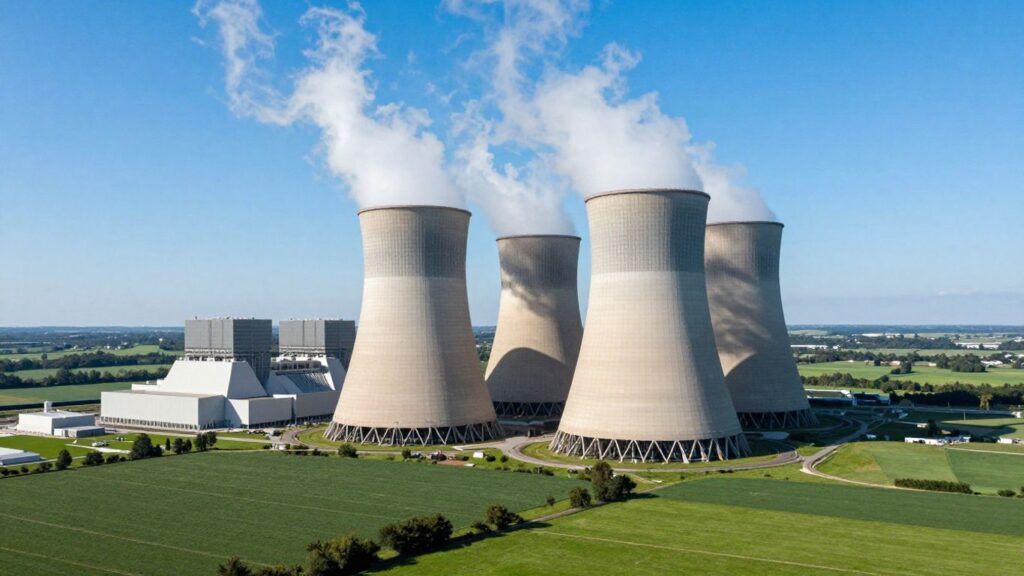

In a significant shift driven by the immense energy needs of artificial intelligence, major technology companies like Microsoft, Google, and Amazon are making substantial investments in nuclear power. This strategic pivot aims to secure reliable, carbon-free energy for their data centers while pursuing ambitious climate goals, marking a new era for the nuclear industry.
Key Takeaways
- Big Tech companies are investing heavily in nuclear power to meet the escalating energy demands of AI development.
- Investments range from restarting existing nuclear plants to funding the development of advanced small modular reactors (SMRs).
- Nuclear power offers a consistent, carbon-free energy source crucial for AI data centers, unlike intermittent renewables.
- Challenges remain, including the long lead times for new reactor construction and the ongoing debate around nuclear waste.
The AI Energy Crunch
The rapid advancement and deployment of artificial intelligence have created an unprecedented demand for electricity. AI data centers require vast and continuous power, pushing tech giants to seek energy solutions that can meet these needs without compromising their net-zero emission targets. Traditional renewable sources like solar and wind, while important, struggle to provide the constant, reliable power required by these facilities.
Reopening Old Doors: Three Mile Island
Microsoft has taken a notable step by investing $1.6 billion to restart a reactor at the Three Mile Island nuclear plant in Pennsylvania. This move, while controversial given the plant’s history, highlights the strategy of leveraging existing, albeit older, nuclear infrastructure. Constellation Energy, the plant’s owner, emphasizes that reopening an existing facility is significantly faster and cheaper than building new ones, with potential for operation within three years.
Embracing New Technology: Small Modular Reactors
Beyond existing plants, companies like Google and Amazon are investing in the future of nuclear energy through small modular reactors (SMRs). Google is backing Kairos Power, which is developing demonstration plants using a novel pebble-fuel design, aiming for zero carbon emissions. Amazon has invested in X-energy, another SMR developer, and is exploring power purchase agreements for future projects. These SMRs are designed to be smaller, potentially safer, and quicker to deploy than traditional large-scale reactors.
Challenges and Skepticism
Despite the enthusiasm, significant hurdles exist. Critics point out that many advanced nuclear technologies, particularly SMRs, are still in development and have yet to be proven at scale. The timeline for constructing new nuclear plants, even SMRs, can extend for years, potentially creating a gap between AI’s immediate energy needs and nuclear power’s availability. Furthermore, the issue of nuclear waste disposal remains a persistent concern.
A Mutually Beneficial Relationship?
The influx of investment from Big Tech could revitalize the nuclear industry, which has faced economic challenges and a slowdown in new construction. For tech companies, nuclear power offers a path to reliable, carbon-free energy that aligns with their climate commitments. While the full impact of this partnership remains to be seen, it signals a significant convergence of technological ambition and energy strategy.
Sources
- Big Tech’s big bet on nuclear power to fuel artificial intelligence, CBS News.
- Big Tech’s big bet on nuclear power, CBS News.
- Big Tech Embraces Nuclear Power to Meet Growing Energy Needs, Business Insider.
- Google’s Quiet Nuclear Energy Quest, IEEE Spectrum.
- Can nuclear power really fuel the rise of AI?, MIT Technology Review.