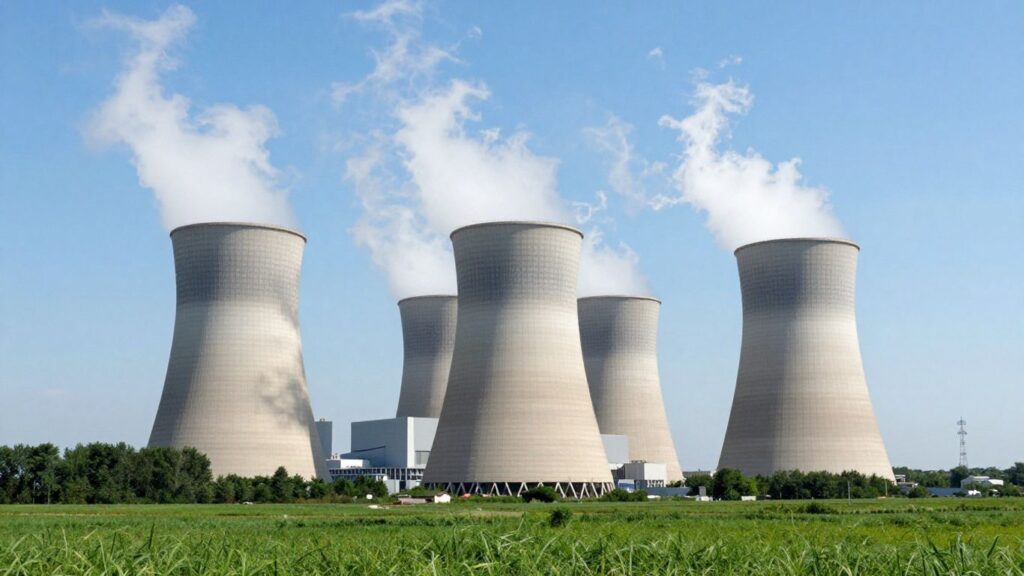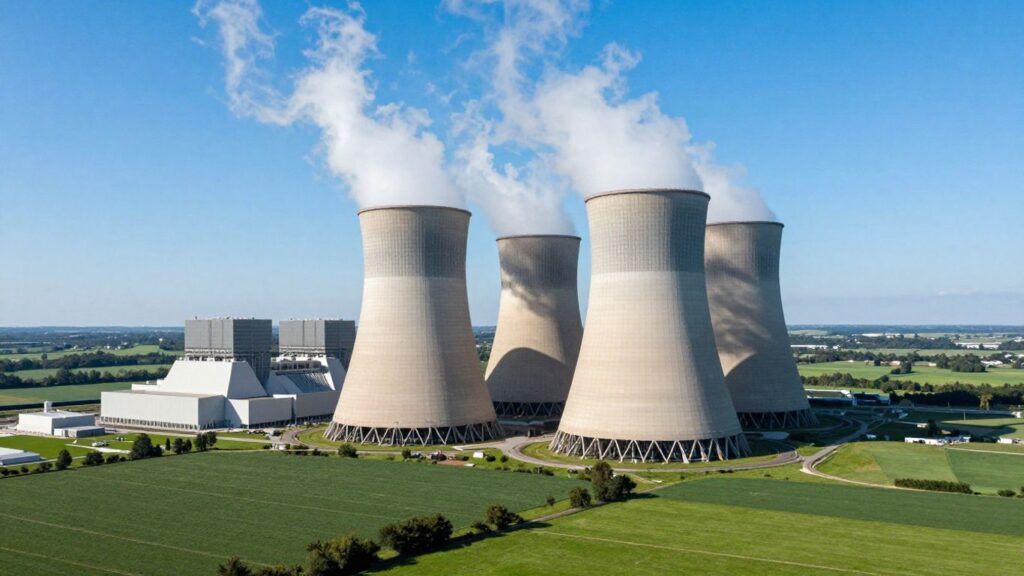

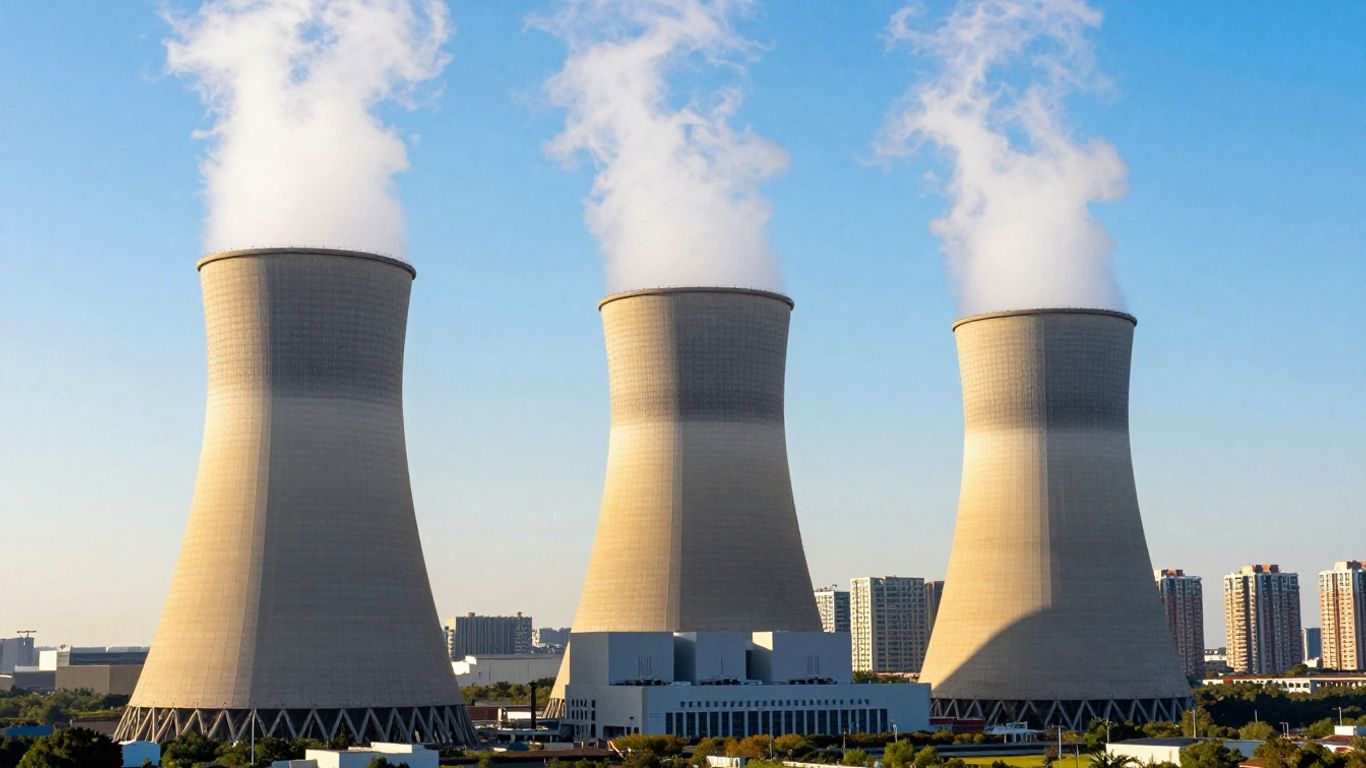
Nuclear energy is experiencing a significant revival, with projections indicating a potential $10 trillion market opportunity. This resurgence is driven by the escalating global demand for electricity, fueled by energy-intensive technologies like AI data centers and the electrification of transportation. Experts suggest that to meet these needs, global nuclear capacity must triple by 2050, requiring over $3 trillion in investment over the next 25 years.
Key Takeaways
- Nuclear power is poised to become a $10 trillion industry.
- Global nuclear capacity needs to triple by 2050 to meet demand.
- Small Modular Reactors (SMRs) are a key innovation for faster, cheaper deployment.
- The US is working to rebuild its domestic uranium enrichment capabilities.
- Companies across the nuclear supply chain are seeing significant stock price increases.
The Driving Forces Behind Nuclear’s Comeback
The "rediscovery" of nuclear energy is attributed to several factors. The burgeoning demand from AI and data centers, coupled with the electrification of buildings and industries, has created an unprecedented need for reliable, clean, and dispatchable power. Unlike intermittent renewable sources, nuclear power offers a consistent energy supply, making it an attractive option for grid stability.
Small Modular Reactors: The Future of Nuclear
A significant development in the nuclear sector is the rise of Small Modular Reactors (SMRs). These reactors, typically producing 500 megawatts or less, are designed for quicker and more cost-effective construction compared to traditional large-scale plants. Their modular design allows for mass production of components, streamlining the deployment process. Companies like NuScale Power and Oklo are at the forefront of SMR development, with some aiming for market readiness by the end of the decade.
Strengthening the Nuclear Supply Chain
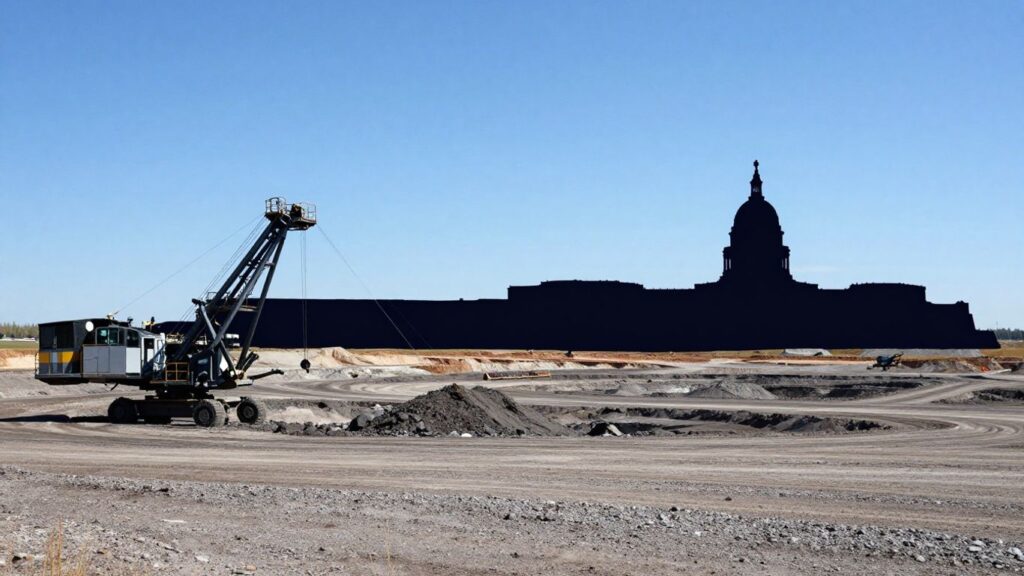
The renewed focus on nuclear power is also highlighting the importance of a robust domestic supply chain. The United States is actively working to rebuild its uranium enrichment capabilities, particularly for High-Assay Low-Enriched Uranium (HALEU), a critical fuel for advanced reactors. This effort is partly driven by geopolitical considerations, as Russia has historically dominated the uranium enrichment market. Companies involved in uranium mining and enrichment, such as Centrus Energy and Energy Fuels, have seen substantial growth in their stock values.
A Positive Outlook for the Nuclear Sector
With strong governmental support and a shifting public narrative, the outlook for nuclear energy is increasingly positive. Analysts predict a significant increase in nuclear power generation in the coming years, with some forecasting a tripling of its contribution to the US power mix within the next decade. This growth is expected to be driven by the need for round-the-clock clean energy sources to complement renewable energy expansion.