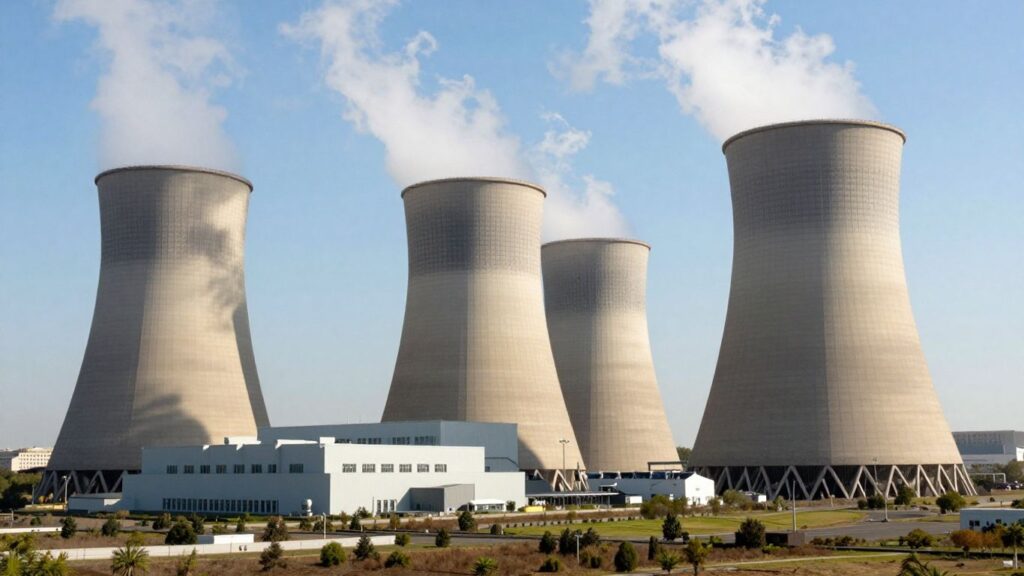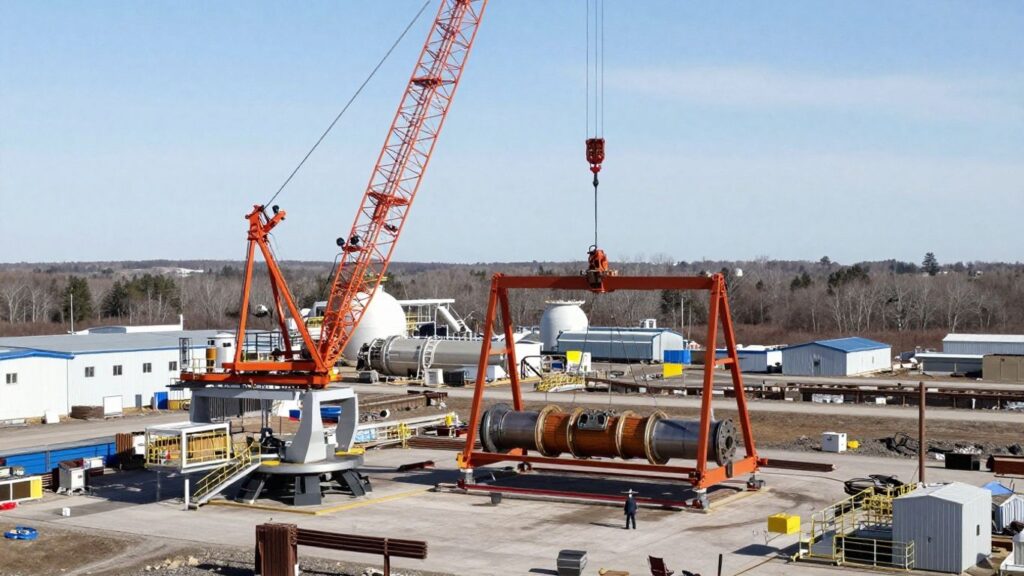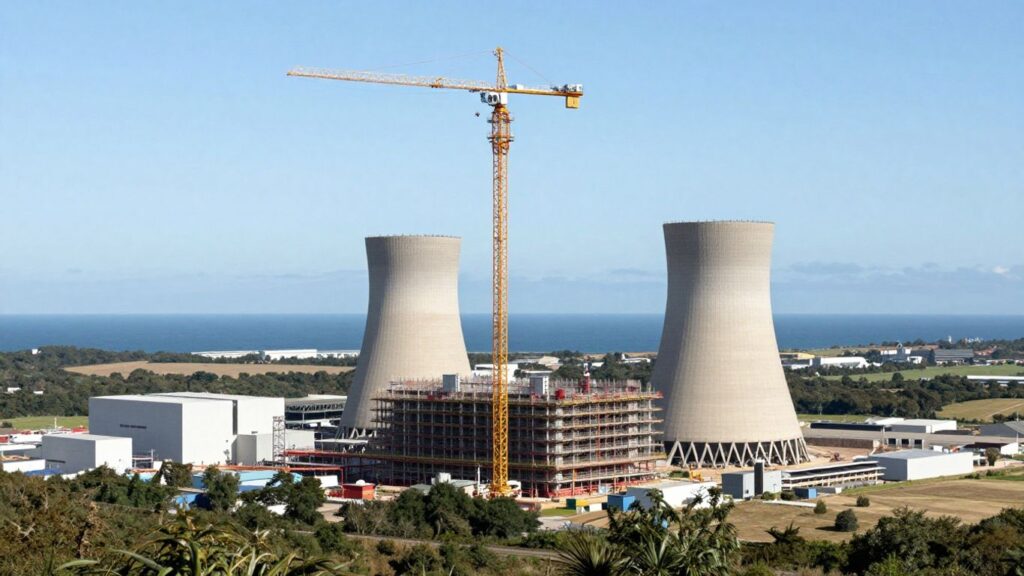

The United Kingdom and the United States have solidified a landmark partnership aimed at enhancing energy security and fostering economic prosperity through a significant expansion of nuclear power capabilities. This collaboration is set to accelerate the development of new nuclear power plants in both nations, streamline regulatory processes, and unlock substantial private investment in clean energy technologies.
Key Takeaways
- A new agreement between the UK and US governments aims to expedite the licensing process for nuclear projects, potentially halving approval times.
- Several commercial deals between UK and US companies have been announced, focusing on the development of advanced modular reactors (AMRs) and small modular reactors (SMRs).
- The partnership includes commitments to create thousands of jobs and boost economic value, with significant investment targeted for regions like the North East of England.
- The agreement seeks to reduce reliance on Russian nuclear materials and strengthen global energy supply chains.
- Collaboration extends to fusion energy research, leveraging AI for advanced simulation tools.
A New Era for Nuclear Power
The "Atlantic Partnership for Advanced Nuclear Energy" is designed to create a more efficient pathway for constructing new nuclear power stations. By allowing reactor designs that have already passed rigorous safety checks in one country to be recognized by the other, the process for obtaining regulatory approval is expected to be significantly shortened. This move is anticipated to accelerate the deployment of new nuclear projects, supporting the UK’s ambition to become a clean energy superpower.
Major Commercial Commitments
The partnership has already facilitated several significant commercial agreements. These include plans by X-Energy and Centrica to build up to 12 advanced modular reactors in Hartlepool, a project estimated to generate enough power for 1.5 million homes and create up to 2,500 jobs. Other deals involve Holtec, EDF, and Tritax for data centers powered by small modular reactors, and Last Energy and DP World for micro modular nuclear power plants. Furthermore, Urenco and Radiant have agreed to supply advanced HALEU fuel to the US market, with plans for a new fuel facility in the UK.
Economic and Employment Boost
These initiatives are projected to generate substantial economic benefits, with estimates suggesting billions in economic value and the creation of thousands of high-skilled construction and long-term operational jobs. The government highlights that the nuclear industry is already a significant employer in the UK, with record numbers of people working in the sector. This expansion is expected to further solidify the UK’s position as a leading destination for nuclear investment.
Strengthening Energy Security and Reducing Global Dependencies
A key objective of the UK-US collaboration is to enhance energy security and reduce geopolitical vulnerabilities. The agreement includes a commitment to eliminate dependencies on Russian nuclear material by the end of 2028, thereby diminishing Russia’s influence in the global energy market. This strategic alignment aims to build more resilient fuel supply chains and break reliance on hostile energy sources.
Innovation in Fusion Energy and Regulatory Reform
Beyond fission power, the partnership extends to fusion energy research. British and American expertise will be combined with AI technology to develop advanced simulation tools, accelerating progress towards commercial fusion power. On the regulatory front, efforts are underway to streamline processes, with a focus on making it quicker and more cost-effective to build nuclear facilities, including Small Modular Reactors (SMRs), which are now being incorporated into planning rules for the first time.
Sources
- Golden age of nuclear delivers UK-US deal on energy security, GOV.UK.
- UK and US unveil nuclear energy deal ahead of Trump visit, BBC.
- The history of nuclear energy lies on British soil — does its future?, CNBC.
- Biggest expansion of nuclear power for 70 years to create jobs, reduce bills and strengthen Britain’s energy
security, GOV.UK. - Government rips up rules to fire-up nuclear power, GOV.UK.