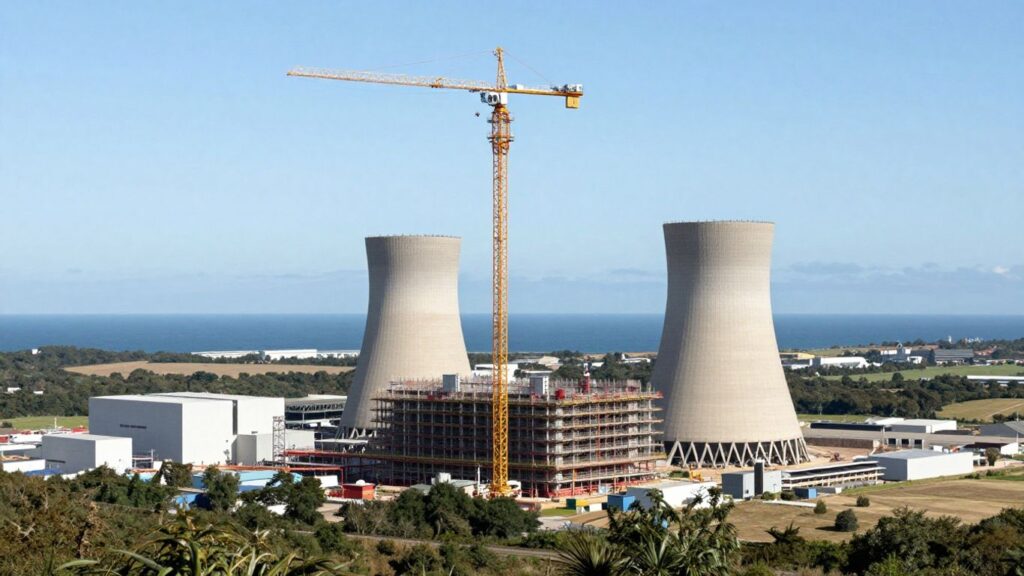


A significant potential breakthrough in nuclear fusion energy suggests that the long-sought goal of clean, virtually limitless power may be closer than previously imagined. Advances in technology and a surge in private investment are accelerating the timeline for fusion power plants to come online, potentially reshaping the global energy landscape within the next decade.
Key Takeaways
- Commercial fusion power plants could begin operations in the early 2030s.
- Key innovations, like high-temperature superconducting magnets, are driving progress.
- Private investment has surged, with companies raising billions to commercialize fusion.
- Regulatory frameworks are adapting to facilitate faster deployment.
- Fusion offers a path to abundant, zero-carbon energy, with significant economic and geopolitical implications.
The Dawn of Commercial Fusion
For decades, nuclear fusion has been a distant dream, often described as "20 years away." However, recent advancements, particularly in high-temperature superconducting magnets, are making commercial fusion power a tangible reality. Companies like Commonwealth Fusion Systems (CFS) are at the forefront, with plans to have a pilot plant delivering power to the grid in the early 2030s. This accelerated timeline is fueled by a combination of scientific breakthroughs and a new wave of private investment, flipping the script from government-led research to commercially driven innovation.
Technological Innovations Driving Progress
The core of fusion energy lies in replicating the process that powers the sun: fusing atomic nuclei to release vast amounts of energy. A critical innovation enabling this on Earth is the development of powerful magnets made from high-temperature superconducting tape. These magnets are essential for containing the superheated plasma within a tokamak, a donut-shaped device, at temperatures reaching 100 million degrees Celsius. The ability to manufacture these magnets efficiently is a testament to the commercial viability now being pursued.
A New Era of Investment and Regulation
Unlike previous decades where government funding dominated fusion research, the current landscape is marked by significant private sector involvement. Over 45 private companies globally are now working to commercialize fusion, having collectively raised more than $7 billion. This influx of capital, often from tech giants seeking reliable power for data centers, is accelerating development. Furthermore, regulatory bodies are adapting, with streamlined processes for fusion reactors that treat them more like less risky particle accelerators than traditional fission plants, paving the way for quicker deployment.
Economic and Geopolitical Implications
The potential impact of fusion energy is profound. It promises a source of clean, abundant, and affordable electricity, which could significantly aid in combating climate change and reshaping global geopolitics by reducing reliance on fossil fuels. Studies suggest fusion could dramatically increase global GDP and provide essential energy for developing regions. However, the transition also presents challenges, including the potential for existing energy infrastructure to become stranded assets and the need for new regulatory frameworks. The race to commercialize fusion is not just a technological one but also a geopolitical one, with nations like China making substantial investments.
The Road Ahead
While the path to widespread fusion power is still complex, the current momentum suggests a transformative shift is underway. The successful demonstration of net-positive energy gain in recent years, coupled with rapid commercialization efforts, indicates that fusion energy may soon move from the realm of science fiction to a cornerstone of the global energy supply, offering a sustainable solution for future generations.
Sources
- A Nuclear Fusion Breakthrough May Be Closer Than You Think, Time Magazine.
- Is the world ready for the transformational power of fusion?, The World Economic Forum.
- Nuclear fusion news: The science behind the energy technology, The World Economic Forum.